Best Pocket App Alternatives in 2026: 5 Replacements
Need a Pocket app alternative after its shutdown? Compare Instapaper, Readwise Reader, Matter, GoodLinks, and Rtriv by price, platform, and use case.
The 5 best Pocket app alternatives in 2026
Pocket shut down in 2025. The best Pocket app alternative now depends on what you saved: choose Instapaper for simple reading, Readwise Reader for research, Matter for newsletters, GoodLinks for an Apple-only purchase, or Rtriv for supported social content you want to turn into action.
Pocket alternatives at a glance
| App | Best for | Platforms | Current model |
|---|---|---|---|
| Instapaper | Simple offline reading | Web, iOS, Android | Free core; optional Premium |
| Readwise Reader | Research, PDFs, highlights and exports | Web, iOS, Android, desktop | 30-day trial; paid afterward |
| Matter | Reading and newsletters | Web and Apple devices | Free core; optional Premium |
| GoodLinks | Private Apple-native reading | iPhone, iPad, Mac | Paid universal app |
| Rtriv | Organizing supported social and web content into actions | iPhone | Free plan; optional Premium |
Fast recommendation: start with Instapaper if you mainly need a familiar reading queue. Choose Readwise Reader if annotations and knowledge workflows matter more than simplicity. Choose Rtriv if most of what you save begins inside social apps rather than long-form articles.
On This Page
- Why People Are Looking for a Pocket App Alternative
- The Best Read-It-Later Apps Compared
- When Standard Save-for-Later Apps Aren't Enough
- Rtriv: A Different Kind of Alternative to Pocket App
- How to Choose the Right Read Later App for You
- Key Takeaways
- Frequently Asked Questions
Why People Are Looking for a Pocket App Alternative
Mozilla shut Pocket down on July 8, 2025. Its apps, extensions and API are no longer available, so finding a Pocket alternative is now a migration decision rather than a matter of preference. Current read-it-later apps approach the problem from different angles: focused reading, research, newsletters, or social-content capture.
The migration also offers a useful reset. Before importing every old link, decide which material still supports a current project and which can be archived. The problem is rarely a lack of storage; it is the absence of a review habit after capture.
If you already downloaded a Pocket export, keep the untouched original and test a small import before reorganizing the whole library. Mozilla's export window ended on November 12, 2025, so users who did not export before that deadline can no longer retrieve the old library through Pocket.
The Best Read-It-Later Apps Compared
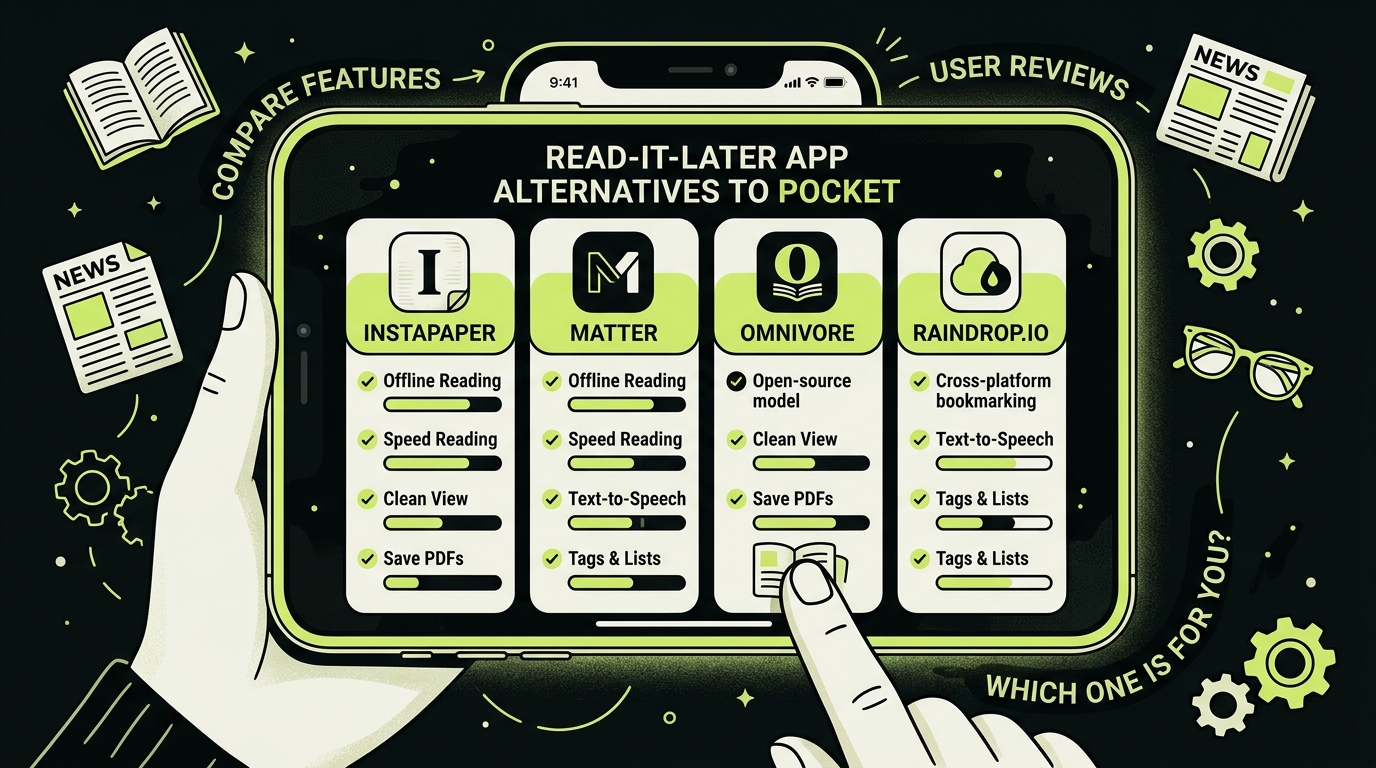
There's no shortage of read it later apps competing for your attention. Here's a clear-eyed breakdown of what each one actually does well — and where it falls short.
Instapaper
Instapaper is the original minimalist bookmark tool. It strips articles down to clean text, supports offline reading, and integrates with a wide range of third-party apps. The free tier is genuinely usable, which makes it one of the most accessible pocket app alternatives for casual readers.
The downside: Instapaper hasn't evolved much in recent years. It lacks robust tagging, its mobile app feels dated, and there's no meaningful support for saving content from video-first platforms like TikTok or Instagram Reels.
Readwise Reader
Readwise Reader is the power-user's choice. It unifies your RSS feeds, newsletters, PDFs, articles, and highlights into one interface, with a spaced-repetition system that resurfaces what you've read. If you're a researcher, writer, or heavy reader, it's arguably the most sophisticated article bookmarking tool available right now.
The catch: after a 30-day trial, Readwise currently costs $9.99 per month when billed annually or $12.99 month-to-month. Its depth also creates a steeper learning curve than a simple reading queue.
Matter
Matter positions itself as a social reading app. You can follow other readers, see what they're highlighting, and discover content through your network. It's particularly strong for newsletter saving and has a clean, modern interface.
That said, the social layer can feel like a distraction for users who are already trying to reduce screen time. Saving content shouldn't require navigating another feed.
GoodLinks
GoodLinks is a clean, paid-once iOS app that lives entirely in your Apple ecosystem. No subscription, iCloud sync, solid tagging. For iPhone and Mac users who want something simple and private, it's a compelling save-for-later app with no algorithmic interference.
Its weakness is also its simplicity — there's no web clipper extension on par with Pocket's, and cross-platform support is limited to Apple devices only.
When Standard Save-for-Later Apps Aren't Enough
Here's the uncomfortable truth that most app comparison articles skip over: for a large subset of users, the problem isn't which article bookmarking tool they're using. The problem is the behavior pattern that surrounds saving in the first place.
Mozilla's official Pocket shutdown guide explains the service timeline and export process. Export first, preserve the source URLs, and test a small sample in the replacement before reorganizing the full library.
In other words, swapping Pocket for Instapaper doesn't fix the root issue if you're still opening Instagram at 11pm, doom-scrolling for twenty minutes, and reflexively saving fifteen articles you'll never read.
This is why a new category of read-it-later services is emerging — ones that treat saving not just as archiving, but as a moment to introduce intentional friction and interrupt the automaticity of scrolling.
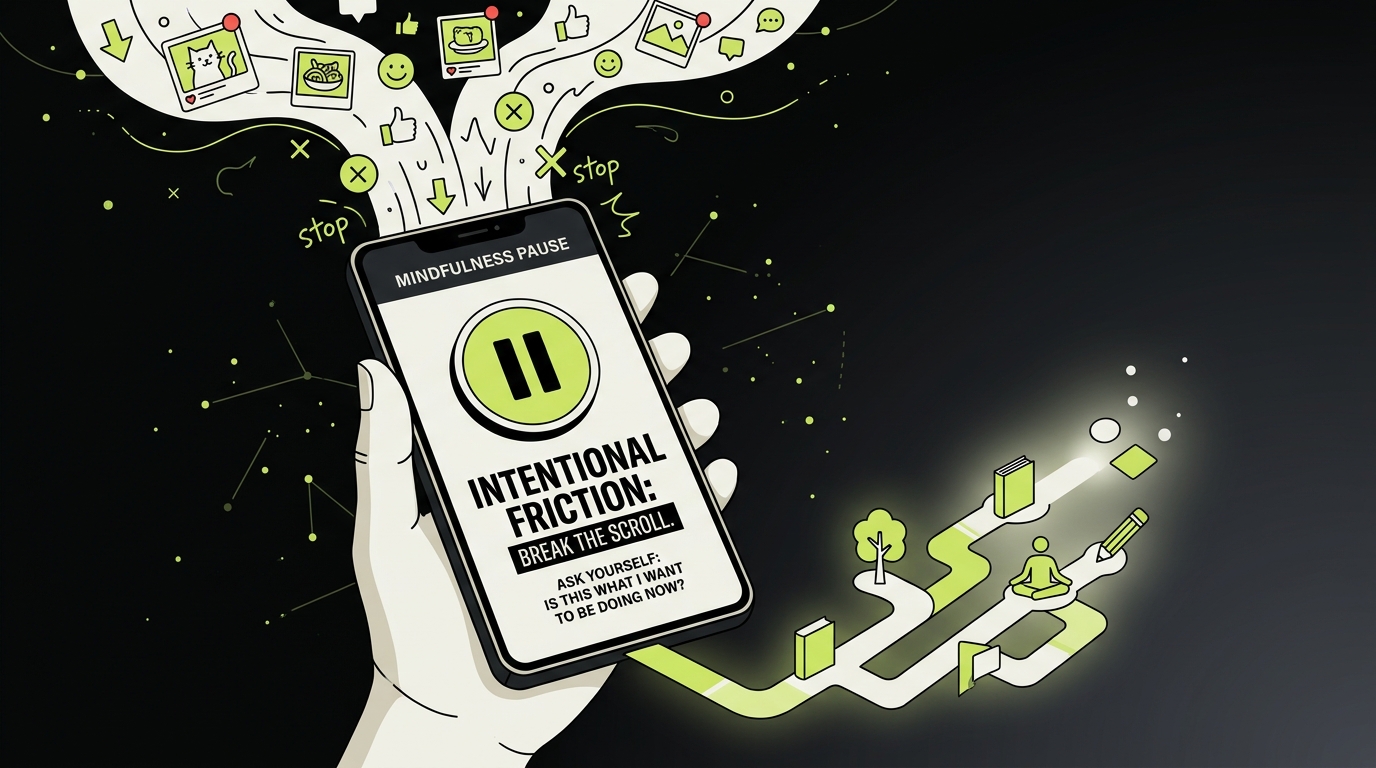
The apps in the previous section are excellent at what they do. But they were designed to make saving as effortless as possible — and effortless saving, paradoxically, can make it easier to stay stuck in the scroll.
Rtriv: A Different Kind of Alternative to Pocket App
This is where Rtriv enters the picture. It is better understood as an action-oriented alternative for social saves than as a clone of Pocket's article reader.
Save Content From Social Media — With Intention
Rtriv accepts supported content shared from social platforms and the web, then extracts useful information so the save can become a recipe, place, event, tutorial, product, or other actionable item. The goal is not merely to keep another unread URL queue.
Friction as a Feature, Not a Bug
Rtriv's attention controls can add configurable friction before distracting apps, while its save workflow preserves useful content outside the feed. These are complementary features: one creates a stopping point, and the other gives valuable discoveries somewhere useful to go.
Who Rtriv Is For
Rtriv is particularly well-suited for iPhone users who:
- save recipes, places, products, events, or tutorials from social platforms;
- want extracted details rather than a bare list of URLs;
- want saved ideas to lead to collections or actions;
- also want optional friction around distracting apps.
If you want a deeper look at how Rtriv fits within the broader iOS productivity ecosystem, the Best read-it-later apps for iPhone in 2026 guide covers the full landscape.
How to Choose the Right Read Later App for You
The right pocket app alternative depends entirely on what's actually not working for you right now. Here's a quick framework.
Choose Instapaper if you want a clean, free, no-fuss reading experience with minimal setup and no subscription pressure.
Choose Readwise Reader if you're a knowledge worker, researcher, or prolific reader who wants to synthesize and resurface everything you consume — and you don't mind paying for it.
Choose Matter if you're heavily into newsletters and want a social discovery layer built into your reading workflow.
Choose GoodLinks if you're Apple-only, privacy-conscious, and want a one-time purchase with no algorithmic interference.
Choose Rtriv if your library starts in social apps and you want to turn supported posts into structured, actionable saves rather than recreate Pocket's article-reading experience.
The distinction matters. A traditional read-it-later service is optimized for reading articles. Rtriv is optimized for recovering useful ideas from feeds and acting on them.
Related reading :
- Best Content Curation Tools in 2026 (Honest Picks)
- Best Bookmark Manager Apps for iPhone 2026
- Best Digital Wellness Apps in 2026: Full Comparison
Key Takeaways
- Pocket shut down in July 2025; users now need an active replacement for reading, research or social-content workflows.
- The best read-it-later apps each serve a different use case: Instapaper for simplicity, Readwise Reader for synthesis, Matter for newsletters, GoodLinks for Apple-native privacy, and Rtriv for intentional saving.
- Rtriv is not a like-for-like Pocket clone: it focuses on extracting and acting on supported social and web content, with separate attention controls for distracting apps.
- If your saved-articles queue is growing faster than you can read it, the problem may not be the app — it may be the behavior pattern the app is reinforcing.
- Rtriv is one option for people who want to bring supported social content into the same action-oriented workflow as other saved ideas.
Frequently Asked Questions
About
Équipe RTRIV
We design RTRIV to turn saved content into decisions, projects and moments that are actually lived.