Can Phone Addiction Cause Brain Fog? A Clear Answer
Problematic phone use may contribute to brain fog through sleep loss and distraction, but it is not the only cause. Learn what to test and when to seek care.
Can phone addiction cause brain fog?
Problematic phone use can contribute to symptoms people call brain fog, mainly by disrupting sleep, fragmenting attention and displacing movement or recovery time. But “brain fog” is not a diagnosis, and current research does not prove that a phone directly creates one distinct medical condition.
If you feel mentally slow, forgetful or unable to focus, treat the phone as one testable factor—not the automatic explanation. Medication effects, infection, stress, depression, sleep disorders and other health conditions can produce similar symptoms.
On this page
- What brain fog means
- How phone use may contribute
- What the evidence does and does not show
- A seven-day test
- When to seek medical care
- Frequently asked questions
What brain fog means
Brain fog is an informal label for experiences such as slowed thinking, poor concentration, forgetfulness, difficulty finding words or mental fatigue. It describes symptoms, not their cause. Our broader guide to brain fog causes explains the term and common possibilities.
Likewise, “phone addiction” is often used casually. Researchers commonly use problematic smartphone use for a pattern involving loss of control or interference with daily life. A high screen-time total alone does not establish addiction: work, navigation, reading and a compulsive feed session can produce the same number with very different consequences.
How phone use may contribute
Sleep disruption
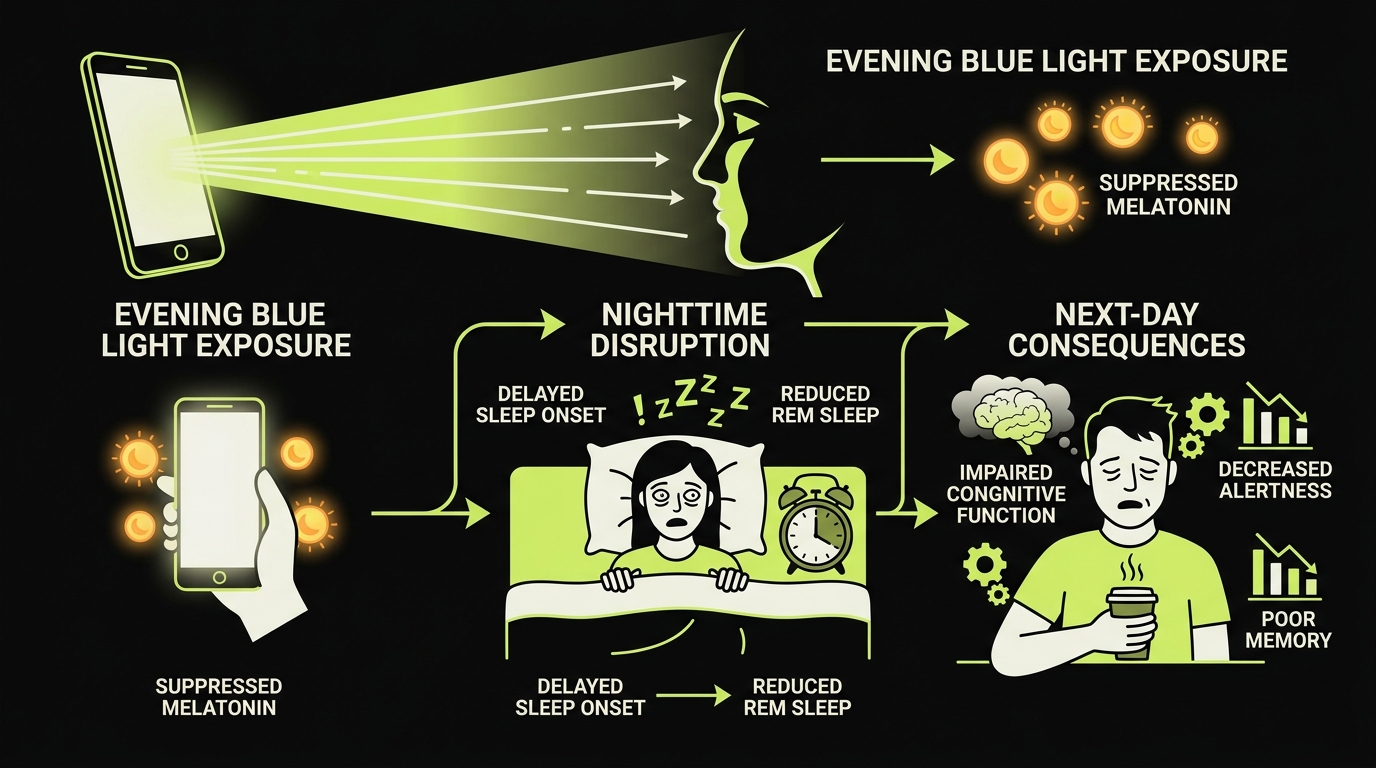
Late-night use can delay bedtime through content, alerts and lost track of time. Light exposure may also affect circadian timing, but the behavior around the screen matters too. A systematic review and meta-analysis of observational studies found smartphone overuse associated with poorer self-reported sleep quality, sleep deprivation and longer sleep latency. High heterogeneity means this is not proof that phones caused every sleep problem.
Poor sleep can then produce next-day fatigue, slowed processing and concentration problems that feel like brain fog.
Repeated interruption
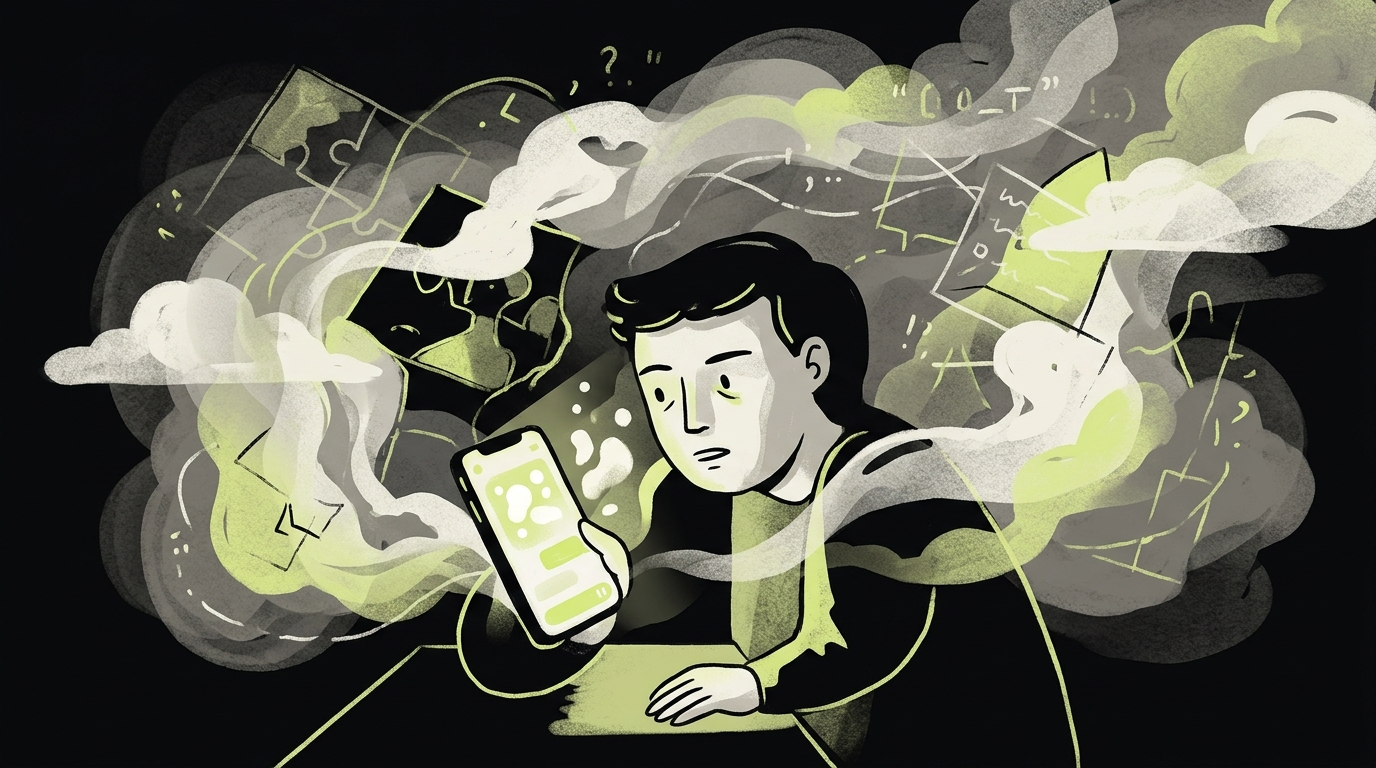
Each check changes the task in front of you. Returning may require reconstructing your goal and working context. A meta-analysis of 22 studies found an overall negative effect of smartphone use or presence on cognitive performance, while also finding variation across cognitive domains and studies.
The practical lesson is not that a phone permanently damages attention. It is that availability and interruptions can reduce performance in the moment, especially during demanding work.
Displacement
Phone time can replace sleep, movement, meals, outdoor time or face-to-face contact. In that case, the contribution is indirect. The same duration may have little effect when it replaces television and a larger effect when it replaces an hour of sleep.
Stress and emotional load
News, work messages and social comparison may keep the user mentally activated. Problematic smartphone use is associated with anxiety, depression and poor sleep in observational research, but direction is difficult to determine: distress can also increase phone use.
What the evidence does and does not show
The evidence supports a cautious chain:
- some patterns of phone use are associated with poor sleep or distraction;
- poor sleep and frequent interruption can impair concentration;
- users may experience those effects as “brain fog.”
It does not support several common claims:
- there is no universal four-hour threshold that causes brain fog;
- every notification does not create a standardized dopamine “spike and crash”;
- normal phone use has not been shown to make the prefrontal cortex shut down;
- a weekend “dopamine detox” does not reset receptors;
- reducing screen time cannot rule out other medical causes.
Social media may feel especially tiring because it combines rapid switching, emotional material and an open-ended feed. Still, intentional and passive uses should not be treated as biologically identical. See our guide to guide to stop doomscrolling for the behavioral distinction.
A seven-day test
Use a small experiment instead of an extreme detox. Keep medication, caffeine and sleep opportunity as consistent as reasonably possible so the result is interpretable.
Day 0: record a baseline
Write down bedtime, wake time, social app minutes and number of pickups. Rate mental clarity at the same two times each day from 1 to 5.
Days 1–7: change three conditions
- Charge the phone outside reach for the final hour before bed.
- Turn off non-human notifications such as recommendations and promotions.
- Put the phone in another room for one 25-minute focus block each day.
If social apps are the main issue, add a limit or remove them from the Home Screen. RTRIV can help move supported recipes, places and tutorials into a separate library, reducing the need to reopen a feed for retrieval; it is not a medical treatment.
Day 8: compare, do not diagnose
Look for changes in sleep, pickups and clarity. Improvement suggests the modified habits were contributing. No improvement does not mean the symptoms are imaginary—it means the test did not identify the cause.
Avoid chasing an “instant cure.” The article how to clear brain fog quickly focuses on safe short-term checks while explaining their limits.
When to seek medical care
Contact a healthcare professional when brain fog is persistent, worsening or interfering with daily life. Seek urgent care for sudden confusion or cognitive change, especially with weakness, facial droop, severe headache, trouble speaking, fainting, chest pain or after a head injury.
Also ask for help if symptoms began after a medication change, infection or other health event. A screen-time experiment should never delay appropriate assessment.
Key takeaways
- Problematic phone use may contribute indirectly through sleep disruption, interruption, stress and displacement.
- Brain fog and phone addiction are informal or broad labels, not a cause-and-effect diagnosis.
- There is no universal screen-time threshold that proves the phone is responsible.
- A seven-day controlled test can reveal a pattern without replacing medical care.
- Sudden, severe or persistent cognitive symptoms deserve professional evaluation.
Frequently asked questions
Can phone addiction cause brain fog?
Problematic phone use may contribute to a foggy or distracted feeling, especially when it disrupts sleep or repeatedly interrupts tasks. Research does not establish a single phone-caused condition called brain fog, so persistent symptoms should not be self-diagnosed.
How much screen time causes brain fog?
There is no validated universal threshold. Context matters: late-night use, constant interruptions and loss of control are more informative than one total-hours number. Compare your symptoms during a controlled reduction rather than relying on a generic cutoff.
How long does screen-related brain fog last?
There is no standard duration because brain fog has many possible causes. If sleep disruption and interruptions are contributing, improvement may follow better sleep and fewer checks, but sudden, severe or persistent symptoms need medical evaluation.
Frequently Asked Questions
About
Équipe RTRIV
We design RTRIV to turn saved content into decisions, projects and moments that are actually lived.