What Causes Brain Fog? Common Triggers and Red Flags
Brain fog can accompany poor sleep, stress, medication effects and medical conditions. Learn common causes, what to track and when to seek care.
What Causes Brain Fog? Common Triggers and When to Seek Help
Brain fog is a non-medical label for problems such as reduced concentration, slower thinking, forgetfulness and mental fatigue. It can accompany insufficient sleep or stress, but also medication effects, infections and health conditions. There is no single brain-fog test or universal cause.
On This Page
- What brain fog actually is
- The biological causes of brain fog
- Why do I have brain fog? The lifestyle triggers hiding in plain sight
- Digital overload as a brain fog trigger
- Medical and psychological conditions linked to cognitive haze
- Key Takeaways
- Frequently Asked Questions
What Brain Fog Actually Is
Brain fog is not a medical diagnosis — but that doesn't make it any less real. It's a cluster of cognitive symptoms: difficulty concentrating, mental sluggishness, poor short-term memory, slow processing speed, and the persistent feeling that your thoughts are moving through thick mud. Understanding the brain fog causes behind these symptoms requires looking at the problem from several angles — biological, behavioral, and increasingly, digital.
Most people experience some degree of mental fog at some point in their lives. The question isn't whether it's happening, but why — and that answer is rarely simple.
For a broader look at the full picture, including symptoms and recovery strategies, see our guide on guide to clearing brain fog.
The Biological Causes of Brain Fog
When people ask "why do I have brain fog," biology is often the first place to look. Several well-documented physiological mechanisms can impair cognitive function, even when everything on the surface appears fine.
Sleep Deprivation
Insufficient or disrupted sleep can impair attention, working memory and processing speed the next day. Sleep apnea, shift work, pain and insomnia can all reduce sleep quality even when time in bed appears adequate.
Inflammation and the Brain
Systemic inflammation is one of the most underappreciated brain fog triggers. When the body mounts an inflammatory response — due to illness, a poor diet, gut dysbiosis, or chronic stress — pro-inflammatory cytokines can cross the blood-brain barrier and interfere with neurotransmitter signaling.
This is why people with autoimmune conditions, chronic infections, or post-viral syndromes (including long COVID) so frequently report persistent cognitive impairment. The brain is not isolated from the body's immune activity — it's directly affected by it.
Hormonal Imbalances
Thyroid disorders can include fatigue and cognitive complaints among many other symptoms. Only a clinical assessment and appropriate testing can determine whether thyroid function is relevant.
Hormonal transitions, including perimenopause, can coincide with changes in memory, concentration, sleep and mood. These symptoms have multiple possible explanations and deserve an individualized assessment when disruptive.
Why Do I Have Brain Fog? The Lifestyle Triggers Hiding in Plain Sight
Biology doesn't operate in isolation. Lifestyle choices are among the most actionable brain fog causes — meaning they're also the most directly within your control.
Nutritional Deficiencies
Deficiencies such as vitamin B12 or iron deficiency can contribute to fatigue or cognitive symptoms, but the symptom pattern alone cannot identify a deficiency. Testing and treatment should be based on clinical assessment rather than a broad supplement stack.
Dehydration
Dehydration can contribute to fatigue, headache and difficulty concentrating. Drink normally according to thirst and circumstances; persistent cognitive problems should not automatically be attributed to hydration.
Chronic Stress and Cortisol Dysregulation
Stress, anxiety and depression can make concentration, recall and decision-making harder. These symptoms are real, but describing them as cortisol toxicity oversimplifies a complex relationship and cannot establish the cause in an individual.
Digital Overload as a Brain Fog Trigger
This is the angle most brain fog articles miss entirely — and it may be the most relevant one for modern daily life.
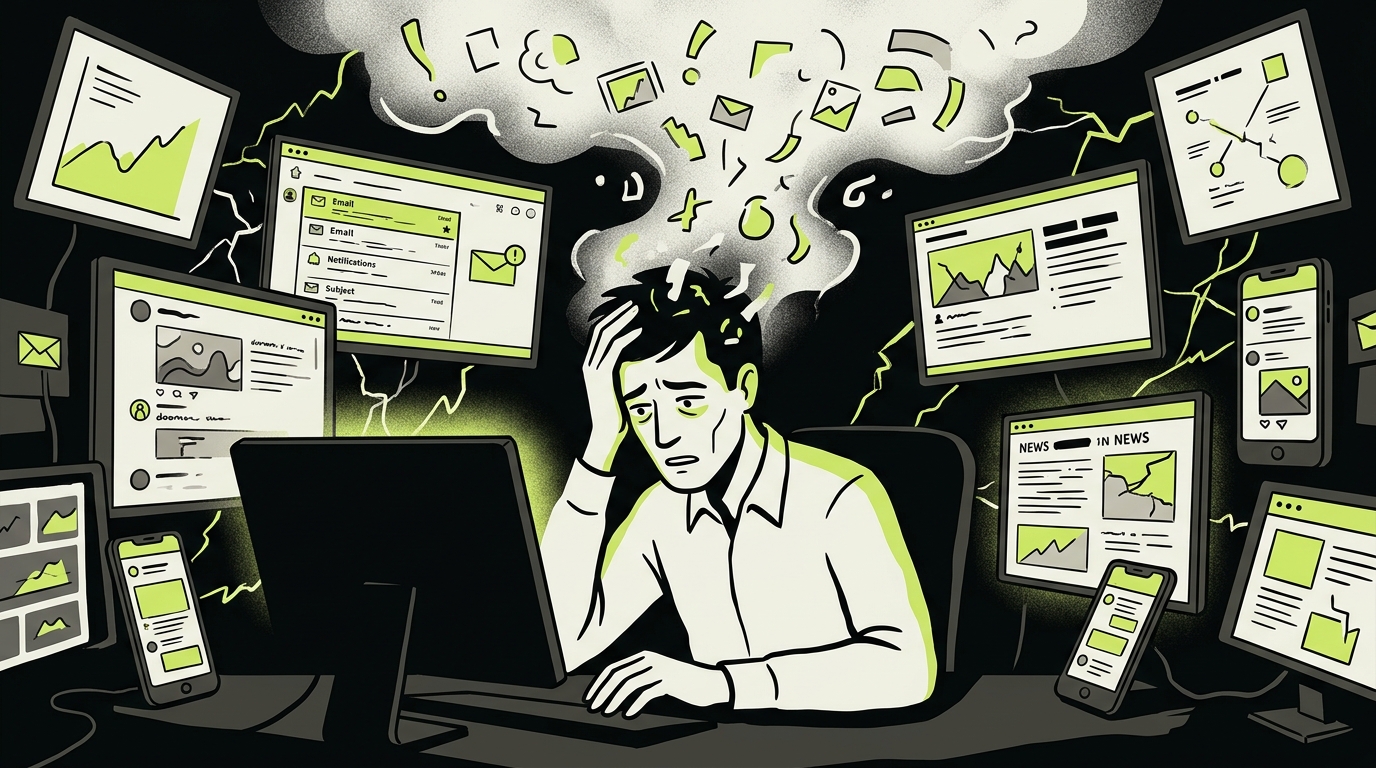
Phone use can fragment a task through notifications and rapid context switching, and bedtime use can displace sleep. Those pathways are more defensible than claiming that a particular number of unlocks rewires every user's reward system.
Attention Fragmentation
Every notification, every swipe, every context switch costs cognitive resources. Researchers call this "attention residue" — the mental footprint left behind when you switch tasks before fully completing the first one. A study from UC Irvine found that it takes an average of 23 minutes to fully regain deep focus after an interruption.
Multiply that across dozens of interruptions per day, and the result is a brain that never enters the sustained, restorative cognitive states it needs — producing that familiar low-grade mental fog by afternoon.
Blue Light and Sleep Disruption
Smartphone screens emit blue-wavelength light that suppresses melatonin production. Evening screen use delays sleep onset, reduces REM sleep quality, and shortens total sleep duration — feeding directly back into the sleep deprivation cycle described earlier.
This creates a compounding loop: poor sleep → brain fog → reaching for the phone for stimulation → worse sleep → more fog.
Separate Digital Triggers from Medical Causes
Run a limited experiment: mute non-essential notifications, keep the phone away during one focus block and avoid it at bedtime for a week. If concentration improves, those habits may be contributing. If it does not—or symptoms are persistent—look beyond the phone with a healthcare professional.
If you're looking for practical recovery strategies beyond the digital angle, our article on How to get rid of brain fog: evidence-based methods covers the full evidence base.
Medical and Psychological Conditions Linked to Cognitive Haze
Sometimes the causes of brain fog run deeper than lifestyle. Several clinical conditions list cognitive impairment as a core symptom — and brain fog is frequently the presenting complaint that leads to a diagnosis.
ADHD
ADHD can involve difficulties with working memory, task initiation and sustained attention. “Brain fog” is not sufficient to identify ADHD, and an evaluation considers the wider pattern and history of symptoms.
Importantly, many adults with ADHD go undiagnosed for years, attributing their chronic fog to laziness or poor character rather than a neurobiological condition. For a deeper look at this connection, see ADHD and brain fog: why it's so common.
Long COVID
Difficulty thinking or concentrating is among the commonly reported symptoms of long COVID. According to the CDC, symptoms vary, can persist for months or years and may require comprehensive care; there is no single laboratory test that proves cognitive symptoms are caused by long COVID.
Depression and Anxiety
Depression and anxiety can both affect concentration, memory, sleep and decision-making. A clinician can help distinguish these patterns from medication effects, sleep disorders and other causes.
Cognitive symptoms are so prevalent in depression that some researchers argue "cognitive fog" should be listed as a core diagnostic criterion rather than an associated feature.
When to Seek Medical Care
Book a medical appointment when brain fog persists, worsens, affects work or everyday safety, follows a new medication, or occurs with ongoing fatigue or other unexplained symptoms. Seek urgent help for sudden confusion or cognitive change accompanied by symptoms such as weakness on one side, trouble speaking, a severe new headache, fainting, chest pain or shortness of breath.
Related reading :
Key Takeaways
- Brain fog has multiple simultaneous causes — biological, lifestyle, digital, and medical — that often compound each other.
- Poor sleep, stress, medication effects, nutritional deficiencies and several health conditions can produce overlapping cognitive symptoms.
- Phone habits may contribute through interruptions or displaced sleep, but they are not a universal diagnosis.
- Track timing, sleep, medication changes and associated symptoms to give a clinician useful context.
- Persistent, worsening or sudden cognitive changes require appropriate medical assessment.
Sources Checked
Frequently Asked Questions
About
Équipe RTRIV
We design RTRIV to turn saved content into decisions, projects and moments that are actually lived.