ADHD Brain Fog: What It Means and What Can Help
ADHD brain fog is not a formal diagnosis. Learn how it differs from ADHD symptoms, what else can cause mental fog, and when to seek an assessment.
ADHD brain fog: the overlap, the differences, and what to do
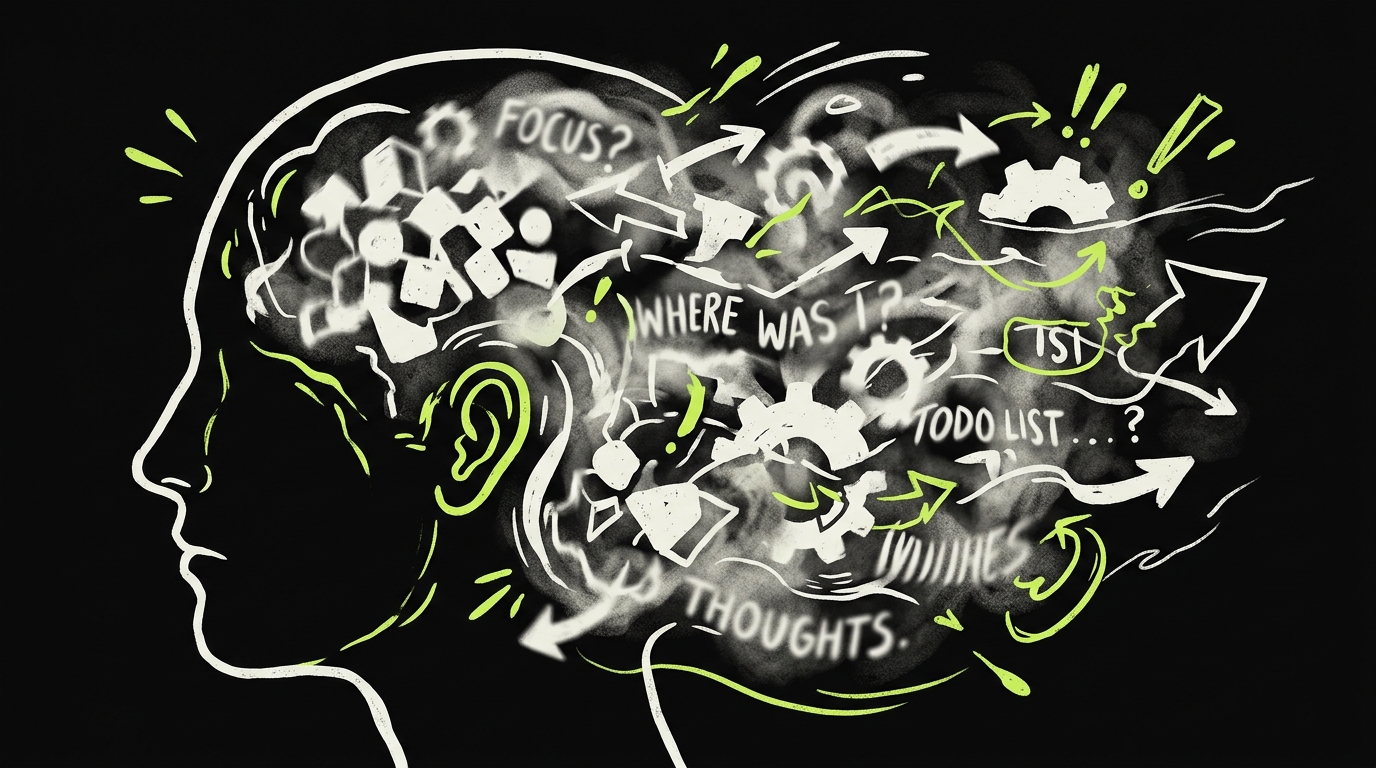
“ADHD brain fog” is an informal way to describe feeling mentally slow, scattered, forgetful, or unable to hold a thought. Brain fog is not an official ADHD symptom or diagnosis. However, established ADHD difficulties—such as distractibility, forgetfulness, poor organization, and trouble sustaining attention—can feel foggy in everyday life.
The distinction matters because sleep problems, anxiety, depression, medication effects, illness, and other conditions can produce similar experiences. A foggy day cannot confirm ADHD, and an online checklist cannot replace a clinical assessment.
In this guide
- Why ADHD can feel like brain fog
- ADHD pattern or temporary mental fog?
- What else should be considered?
- Practical changes that may reduce overload
- When to seek an ADHD assessment
Why ADHD can feel like brain fog
ADHD is a neurodevelopmental disorder characterized by a persistent pattern of inattention and/or hyperactivity and impulsivity. According to the US National Institute of Mental Health, adults may struggle with staying on task, organization, time management, remembering daily activities, and completing larger projects.
Those problems can resemble “fog” in practice:
- losing the thread while speaking or reading;
- forgetting the next step of a task;
- finding it hard to prioritize several demands;
- needing repeated prompts to return to an activity;
- feeling overloaded in a noisy or interruption-heavy environment.
This does not mean every person with ADHD has slower thinking, nor that a vague feeling of fog proves a particular brain-chemistry problem. ADHD is diagnosed from a broader, persistent pattern and its impact—not from a single cognitive sensation.
ADHD pattern or temporary mental fog?
The timeline often provides the most useful clue.
| Question | Pattern more consistent with ADHD | Pattern that needs other explanations considered |
|---|---|---|
| When did it begin? | Relevant symptoms were present before age 12 | Fog appeared recently or after illness, stress, or a medication change |
| Where does it happen? | Symptoms occur in at least two important settings | Difficulty is limited to one situation or time of day |
| How long does it last? | Persistent pattern over months or years | Episodic or rapidly changing symptoms |
| What is affected? | School, work, home, or relationships are impaired | Focus mainly worsens after poor sleep or acute stress |
These are orientation points, not a self-diagnostic test. NIMH and CDC guidance emphasizes childhood history, symptoms in multiple settings, functional impairment, clinical interviews, and consideration of alternative explanations.
If you want to document what you are experiencing, use the brain fog self-check as a symptom log—not as a diagnosis.
What else should be considered?
The CDC notes that anxiety, depression, sleep problems, substance use, learning disabilities, and medical issues can resemble or coexist with ADHD. A clinician may review your health history, mood, sleep, current medication, and childhood experiences before reaching a conclusion.
New mental fog deserves particular attention when it follows an infection, medication change, head injury, major sleep disruption, or a change in physical health. Our guide to common causes of brain fog explains that broader differential without assuming ADHD is responsible.
Seek urgent medical help for sudden severe confusion, especially with weakness on one side, speech difficulty, fainting, chest pain, or a sudden intense headache.
Practical changes that may reduce overload
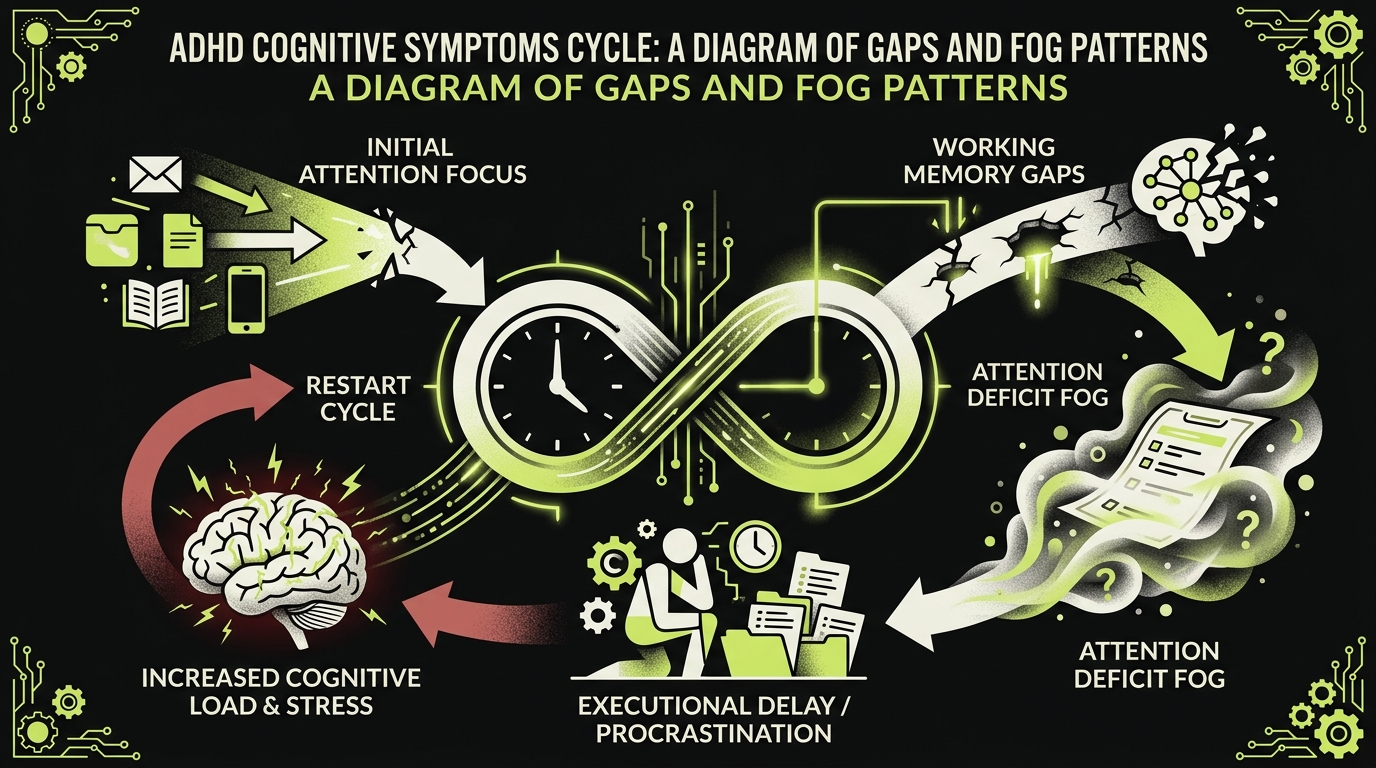
Environmental changes do not cure ADHD, but they can make attention demands easier to manage.
Externalize the next action
Replace a vague task such as “finish report” with one visible next step: “open the document and write the first heading.” Keep instructions, appointments, and short lists outside working memory.
Reduce avoidable interruptions
Silence nonessential notifications, place the phone outside your immediate reach during focused work, and group message checks into planned windows. This is an attention-management experiment, not a claim that screens cause ADHD or “deplete dopamine.” See phone addiction and ADHD for a careful explanation of the overlap.
Protect sleep and basic routines
Regular sleep and wake times, movement, meals, and breaks can reduce factors that worsen concentration. If sleep remains poor, discuss it with a healthcare professional rather than relying on unverified supplements.
Match the support to the diagnosis
Evidence-based ADHD care may include medication, psychotherapy, behavioral interventions, skills training, or workplace and educational accommodations. The appropriate combination depends on the person and should be discussed with a qualified clinician.
When to seek an ADHD assessment
Consider an assessment when attention, organization, impulsivity, or restlessness form a longstanding pattern that affects more than one part of life. Bring concrete examples, an approximate timeline, school reports if available, and observations from someone who knows you well.
NICE recommends that diagnosis be based on a full clinical and psychosocial assessment, developmental and psychiatric history, and information across settings. Rating scales can support the process but should not determine the diagnosis by themselves.
If ADHD has already been diagnosed and cognitive fog is new or markedly worse, speak with the clinician managing your care. A review may uncover sleep issues, another condition, or a treatment-related factor. For general, non-diagnostic strategies, see how to reduce brain fog.
Medical sources
- NIMH — ADHD in adults: four things to know
- CDC — ADHD in adults
- NICE — ADHD diagnosis and management recommendations
- UCLH — understanding and managing brain fog
Key takeaways
Brain fog is an informal description, not an ADHD diagnosis. ADHD may feel foggy because persistent attention and organization difficulties overload daily tasks, but recent or fluctuating symptoms have many possible explanations. Track the pattern, reduce avoidable overload, and seek a qualified assessment when symptoms impair everyday life.
Frequently asked questions
Is brain fog an official ADHD symptom?
No. Brain fog is not an ADHD diagnostic criterion. Some recognized ADHD difficulties—including distractibility, forgetfulness, and poor organization—can nevertheless feel like mental fog.
How can I tell ADHD from temporary brain fog?
ADHD involves persistent symptoms that began in childhood, occur in multiple settings, and impair daily functioning. New or fluctuating fog may relate to sleep, stress, illness, medication, or another condition. Only a professional can diagnose ADHD.
Can reducing phone use cure ADHD brain fog?
No. Fewer interruptions may make focus easier and protect sleep, but reducing phone use does not diagnose or cure ADHD. It is one environmental adjustment, not a substitute for care.
Frequently Asked Questions
About
Équipe RTRIV
We design RTRIV to turn saved content into decisions, projects and moments that are actually lived.