Brain Fog Test: A Symptom Tracker, Not a Diagnosis
No online test can diagnose brain fog. Use this structured symptom tracker to prepare for medical care and recognize signs requiring urgent assessment.
Brain Fog Test: Use a Symptom Tracker, Not an Online Diagnosis
There is no single clinical brain fog test, and an online score cannot identify the cause. What you can do at home is document concentration, memory, processing and fatigue symptoms in a consistent way. That record can reveal patterns and help a healthcare professional decide what to assess.
On This Page
- What a brain fog test can tell you
- The seven-day symptom tracker
- How to interpret the record
- Why scoring quizzes are misleading
- ADHD and brain fog
- When to seek medical care
- Key Takeaways
- Frequently Asked Questions
What a Brain Fog Test Can Tell You
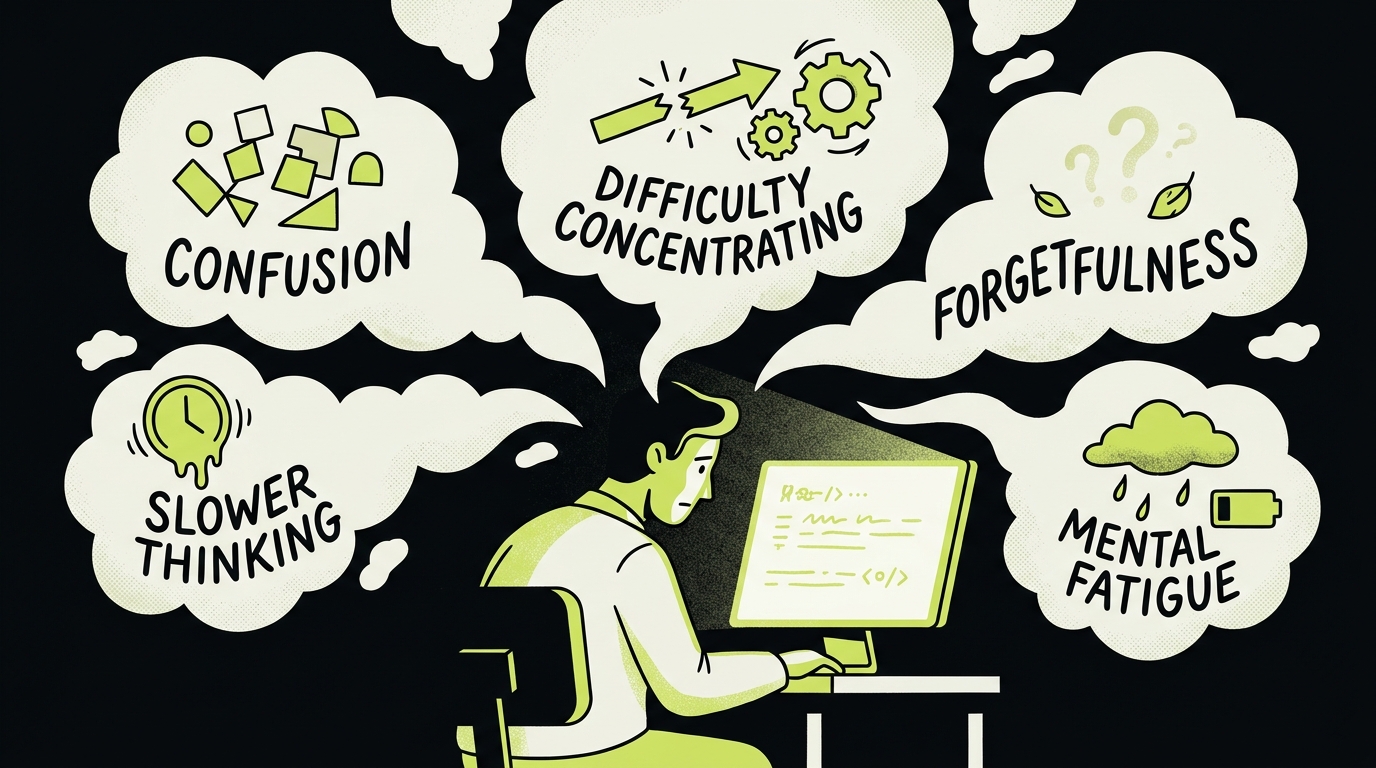
“Brain fog” describes experiences such as slow thinking, difficulty concentrating, forgetfulness, word-finding problems and mental fatigue. It is not a standalone diagnosis. A useful tracker answers narrower questions:
- Which symptom occurs?
- When did it begin and how long does it last?
- Which tasks become difficult?
- What happened beforehand?
- Which other symptoms appear at the same time?
- Does it affect work, driving, medication management or other safety-critical tasks?
It cannot determine whether the cause is poor sleep, a medication, depression, anxiety, ADHD, a nutritional deficiency, thyroid disease, long COVID or another condition.
The Seven-Day Symptom Tracker
Complete one row when symptoms meaningfully affect a task. Do not monitor continuously if that increases anxiety.
| Field | Example of useful detail |
|---|---|
| Date and time | Tuesday, 14:30 |
| What happened | Lost the thread while reading a work email |
| Duration | About 20 minutes |
| Impact | Needed to reread; postponed a decision |
| Sleep | 5 hours, woke twice |
| Food and fluids | Skipped lunch; normally hydrated |
| Medication or substance change | New dose three days ago |
| Other symptoms | Headache, dizziness, low mood, pain or fever |
| Exertion pattern | Worse after physical or mental effort |
Use neutral descriptions. “Forgot one appointment” is more informative than “memory: 8/10.” If possible, compare with your usual functioning rather than with an idealized level of productivity.
How to Interpret the Record
Look for repeated timing and meaningful impact, not a total score:
- Mostly after short sleep: discuss sleep quality and possible causes of disrupted sleep.
- After a medication change: contact the prescriber or pharmacist; do not stop prescribed treatment abruptly.
- After an infection, especially with worsening after effort: reduce pushing through symptoms and seek clinical advice.
- During high anxiety or low mood: include those symptoms in the conversation with a professional.
- No clear pattern but persistent impairment: the absence of a pattern is itself useful information for an assessment.
The UCLH brain fog guidance describes difficulties with memory, language, attention, planning and processing speed, and recommends approaches such as pacing, regular breaks and reducing simultaneous sensory input.
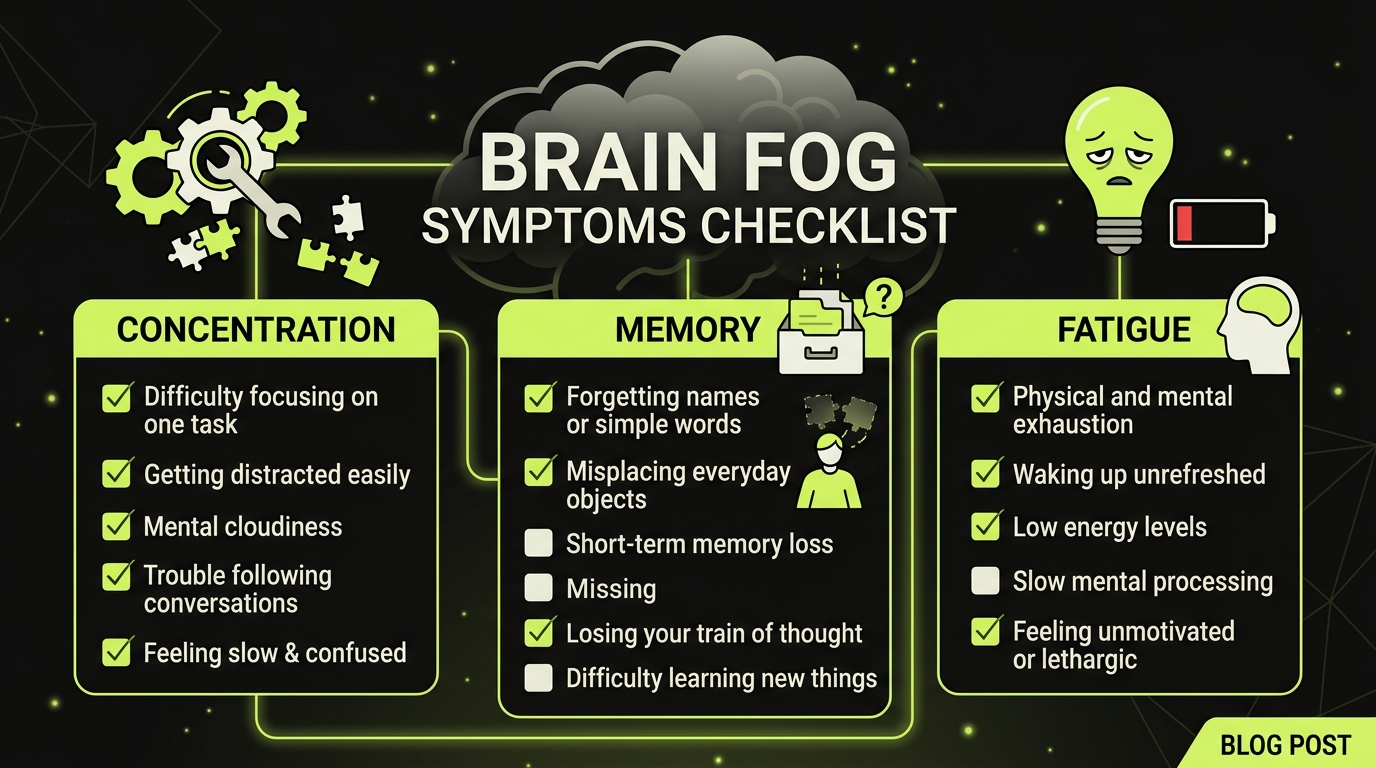
Why Scoring Quizzes Are Misleading
A quiz that assigns “mild,” “moderate” or “severe” brain fog based on an arbitrary number of answers creates false precision. It may also imply that a high score reveals a cause or dictates treatment.
Severity is better judged by change from your baseline, persistence and effect on daily function. One new episode of sudden confusion may be more urgent than many months of mild distractibility, even though a simple checklist could score it lower.
For a detailed overview of possible causes, read What causes brain fog?. For low-risk management strategies, see How to get rid of brain fog safely.
ADHD and Brain Fog
ADHD can involve executive-function, working-memory and attention-regulation difficulties, but “brain fog” is not an ADHD screening instrument. A proper assessment considers whether symptoms form a longstanding pattern, began in childhood, occur in more than one setting and impair daily functioning.
Sleep disorders, anxiety, depression, medication effects and other conditions can overlap with the same complaints. Avoid using a temporary period of poor concentration as proof of ADHD. Our ADHD and brain fog guide explains the distinction in more detail.
Phone interruptions can also make a task harder without constituting a medical condition. If relevant, test alerts and bedtime phone use separately. Rtriv can add configurable friction before selected apps, but it does not diagnose or treat cognitive symptoms.
When to Seek Medical Care
Arrange an appointment when symptoms persist, worsen, affect daily life, follow a medication change or occur with ongoing fatigue or other unexplained symptoms. Bring your tracker and medication list.
Seek urgent help for sudden confusion or cognitive change accompanied by weakness or numbness on one side, trouble speaking, fainting, seizure, chest pain, shortness of breath or a severe new headache.
The CDC includes difficulty thinking or concentrating among commonly reported long-COVID symptoms and advises speaking with a healthcare provider about persistent or difficult-to-explain symptoms. This does not mean that every case of brain fog is long COVID.
Key Takeaways
- No online brain fog test can diagnose the symptom or its cause.
- Track concrete events, timing, context, associated symptoms and functional impact.
- Do not convert checklist answers into invented severity categories.
- Brain fog cannot diagnose ADHD, long COVID or a nutritional deficiency.
- Persistent, worsening or sudden cognitive changes require appropriate medical assessment.
Sources Checked
Frequently Asked Questions
About
Équipe RTRIV
We design RTRIV to turn saved content into decisions, projects and moments that are actually lived.