Can You Clear Brain Fog Instantly? What to Try Safely
There is no guaranteed instant brain fog cure. Use this safe reset checklist, understand common triggers and learn when cognitive symptoms need medical care.
Can You Clear Brain Fog Instantly? A Safe Reset Checklist
There is no guaranteed way to clear brain fog instantly. Brain fog is a non-medical label for slow thinking, forgetfulness, reduced concentration and mental fatigue. A short reset can help when the immediate trigger is ordinary tiredness, hunger, thirst or interruption, but it cannot treat an unknown medical cause.
On This Page
- Start with safety
- A 15-minute reset checklist
- What each step can and cannot do
- Can phone use make concentration worse?
- What not to do
- When to seek medical care
- Key Takeaways
- Frequently Asked Questions
Start With Safety
New, severe or rapidly worsening confusion is not a productivity problem. Seek urgent medical help if it appears with weakness or numbness on one side, difficulty speaking, fainting, chest pain, shortness of breath, a seizure or a severe new headache. Do not drive or operate machinery when you feel cognitively unsafe.
For persistent but non-urgent symptoms, note when they began, medications or doses that changed, recent illness, sleep, associated pain and whether symptoms worsen after physical or mental effort. This is more useful to a clinician than the label “brain fog” alone.
A 15-Minute Reset Checklist
Use this as an observation exercise, not a cure or a sequence that must work:
- Stop and reduce input. Close extra tabs, silence non-essential notifications and move to a quieter space.
- Check basic needs. If you are thirsty, drink normally. If you skipped a meal, choose a regular balanced meal or snack. Avoid forcing excessive water.
- Rest your attention. Look away from the screen and sit quietly for several minutes. Write down the single task you intend to resume.
- Try gentle movement if appropriate. A short walk or stretch may improve alertness. Stop if activity worsens symptoms, particularly after an infection.
- Choose the next smallest action. Work for ten minutes on one defined step, then reassess rather than pushing through worsening symptoms.
| Observation after the reset | Reasonable next step |
|---|---|
| You feel better after food, rest or normal hydration | Note the likely trigger and prevent a repeat |
| Quiet helps, but notifications bring the problem back | Test a focused block with alerts disabled |
| Symptoms recur or affect daily tasks | Keep a short log and arrange medical advice |
| Symptoms worsen with exertion after illness | Stop pushing and discuss pacing with a clinician |
| Confusion began suddenly or includes a red flag | Seek urgent medical care |
What Each Step Can and Cannot Do
A quiet break may reduce competing sensory input. Food can help when you have missed a meal. Normal hydration is relevant when you are thirsty or dehydrated. Gentle movement may improve alertness for some people. None of these observations identifies the underlying cause.
Cold showers, special breathing ratios, chewing gum and caffeine timing are often presented as universal “hacks.” They may change alertness temporarily, but evidence does not support presenting them as a treatment for brain fog. Avoid cold exposure if it is unsafe for your health, and remember that caffeine can disrupt later sleep or worsen anxiety.
The UCLH guidance on managing brain fog emphasizes pacing, regular breaks, reducing simultaneous sensory input and adapting tasks. These strategies manage cognitive load; they do not promise an instant biological reset.
Can Phone Use Make Concentration Worse?
Phone use may contribute through interruption and sleep displacement. Notifications and app switching can break a task into smaller fragments, while scrolling in bed can delay sleep. These pathways are more useful to test than broad claims about dopamine or “brain rewiring.”
For seven days, mute non-essential alerts during one work block and keep the phone outside reach at bedtime. Compare unwanted checks, sleep and concentration with your baseline. If nothing changes, look beyond the phone rather than escalating restrictions.
Rtriv can support this experiment by adding configurable friction or blocking rules before selected apps open. Its saving tools separately organize supported social-media content and web links. It is not a medical treatment for brain fog.
For a fuller analysis, read Can phone addiction cause brain fog? and What causes brain fog?.

What Not to Do
- Do not start high-dose supplements because a listicle names a deficiency.
- Do not eliminate major food groups without a clinical reason.
- Do not interpret temporary improvement as proof of a diagnosis.
- Do not push exercise when it consistently worsens symptoms.
- Do not use more caffeine to mask severe or persistent cognitive change.
- Do not postpone urgent care for sudden confusion or neurological symptoms.
When to Seek Medical Care
Brain fog can accompany sleep problems, stress, depression or anxiety, medication effects, hormonal changes, nutritional deficiencies and illnesses including long COVID. Similar symptoms can therefore require different responses.
Arrange an appointment if the problem persists, worsens, affects work or safety, follows a new medication or is accompanied by ongoing fatigue and other unexplained symptoms. The CDC lists difficulty thinking or concentrating among commonly reported long-COVID symptoms and advises people with persistent or hard-to-explain symptoms to speak with a healthcare provider.
For longer-term management ideas, see How to get rid of brain fog safely.
Key Takeaways
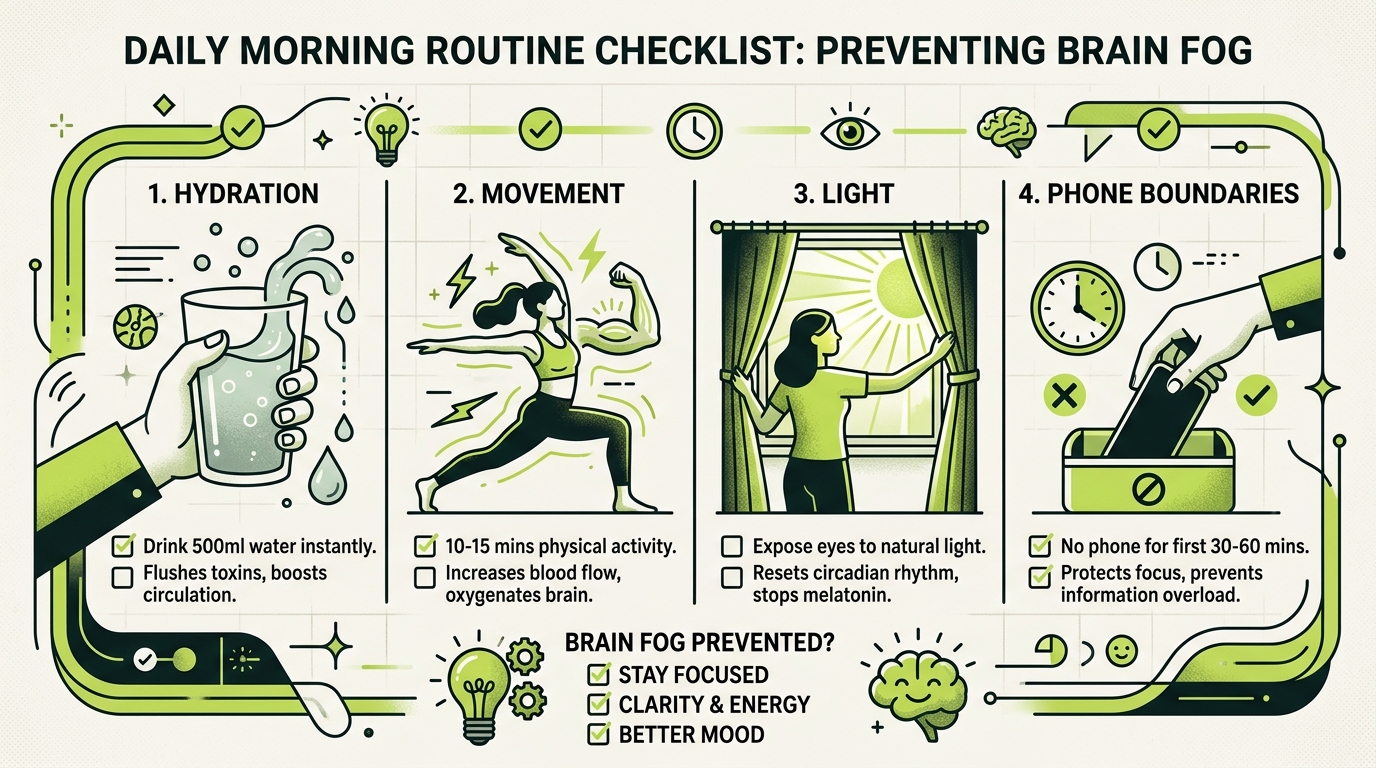
- There is no universal instant brain fog cure because the phrase describes symptoms, not a diagnosis.
- A quiet break, normal hydration, food or gentle movement may help only when the matching trigger is present.
- Test phone interruptions and bedtime use separately instead of assuming dopamine damage.
- Persistent or worsening symptoms deserve medical assessment.
- Sudden confusion or new neurological symptoms require urgent care.
Sources Checked
Frequently Asked Questions
About
Équipe RTRIV
We design RTRIV to turn saved content into decisions, projects and moments that are actually lived.