How to Get Rid of Brain Fog Safely: A Practical Guide
Brain fog has no universal quick fix. Use this practical checklist to address sleep and interruptions, track symptoms and know when to seek medical care.
How to Get Rid of Brain Fog Safely: A Practical Checklist
There is no single treatment for brain fog because it describes symptoms rather than a diagnosis. Start by checking sleep, illness, medications and daily triggers; use low-risk adjustments; and seek medical care when the problem persists, worsens or begins suddenly.
On This Page
- What brain fog actually is — and why it matters
- The hidden causes keeping your mind cloudy
- How to get rid of brain fog: step-by-step
- How your phone is making brain fog worse
- Long-term brain fog remedies that compound over time
- Key Takeaways
- FAQ
What Brain Fog Actually Is — and Why It Matters
If you've ever tried to think clearly and felt like your mind was moving through wet concrete, you've experienced brain fog. It's one of the most common yet misunderstood cognitive complaints — and learning how to get rid of brain fog starts with understanding what it actually is.
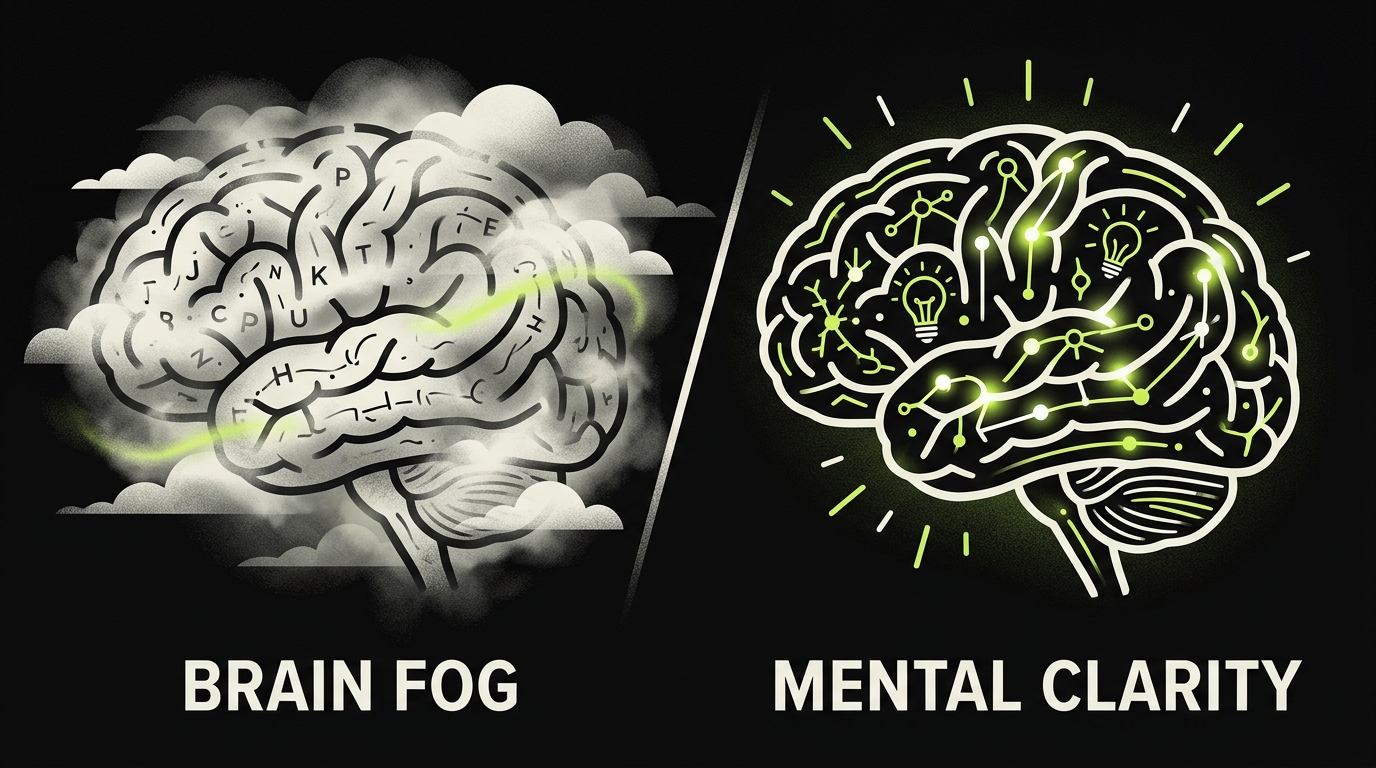
Brain fog isn't a medical diagnosis. It's a cluster of symptoms: difficulty concentrating, slow processing, forgetfulness, mental fatigue, and that persistent sense that your thoughts just won't sharpen. It's the opposite of being "in flow."
It often has no single obvious cause. Avoid treating the phrase as proof of inflammation, dopamine damage or a nutritional deficiency: similar symptoms can arise from very different situations.
For a deeper look at the full symptom picture, see our guide on guide to brain fog causes.
The Hidden Causes Keeping Your Mind Cloudy
Before you can clear brain fog, you need to know what's generating it. Most cases fall into a few overlapping categories — and the frustrating part is that modern digital life hits nearly all of them at once.
Sleep deprivation and disrupted rest
Insufficient or fragmented sleep can impair attention, memory and reaction time. Review bedtime, wake time, awakenings, snoring and daytime sleepiness rather than assuming hours in bed equal restorative sleep.
Nutrient deficiencies
Vitamin B12 or iron deficiency can contribute to fatigue or cognitive symptoms. Do not infer a deficiency from brain fog alone or begin high-dose supplements without appropriate clinical advice and testing.
Chronic stress and cortisol overload
Stress, anxiety and low mood can make concentration and recall harder. This relationship is more complex than a simple claim that cortisol damages the brain, and persistent symptoms deserve a broader assessment.
Inflammation and gut health
Illness, pain and digestive symptoms can coincide with fatigue and difficulty concentrating. Avoid eliminating gluten, dairy or other major food groups solely because of brain fog unless a qualified professional identifies a reason.
To dig into these root causes in more detail, read What causes brain fog? The most common triggers.
How to Get Rid of Brain Fog: Step-by-Step
Once you understand the causes, you can act on them systematically. Here's a structured approach to lifting mental fog — built on what the evidence actually supports.
1. Check Basic Needs Without Expecting an Instant Cure
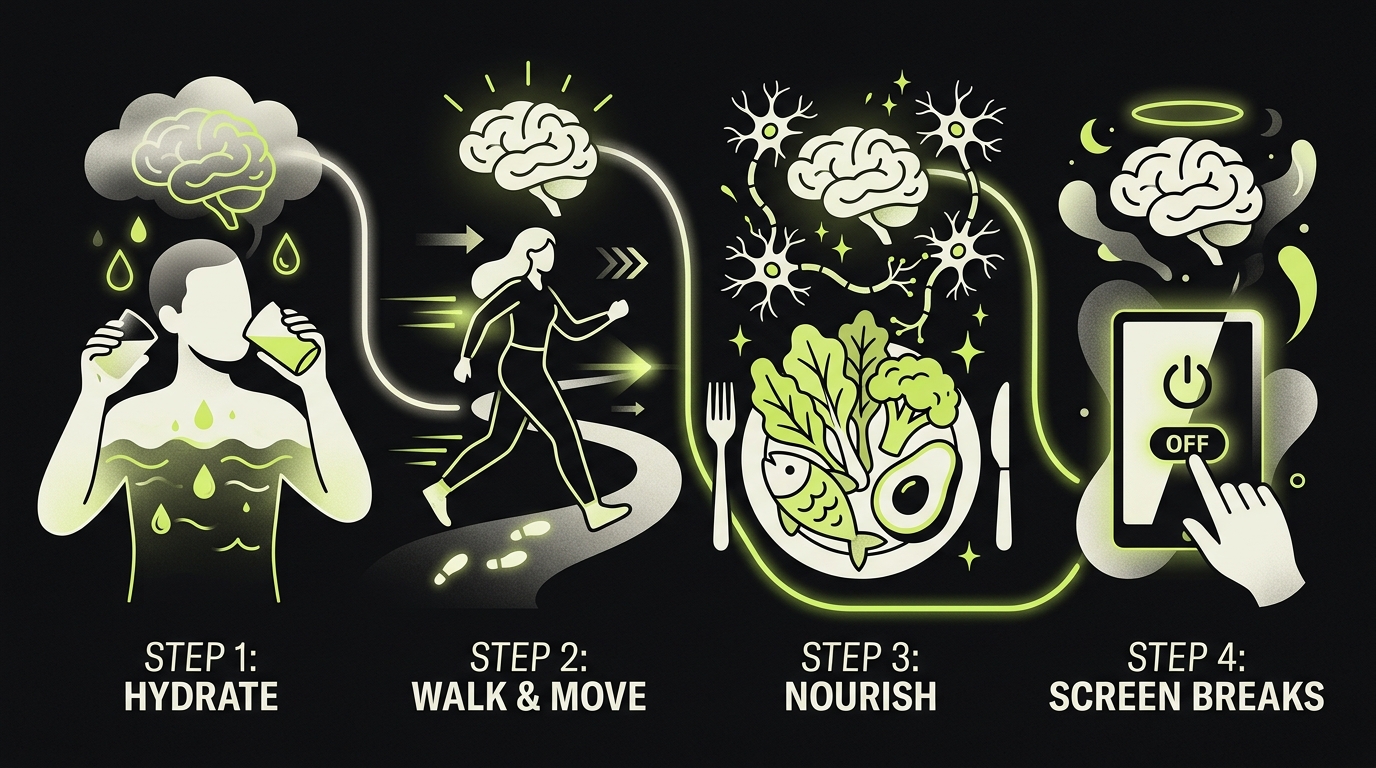
If you are thirsty, hungry, sleep-deprived or acutely unwell, address that first. Normal hydration, food and rest may help when one of those factors is relevant, but improvement within a fixed number of minutes is not guaranteed.
2. Get outside for 10 minutes
Daylight and gentle movement may improve alertness for some people. Try a short walk or quiet outdoor break if it is safe for you. If activity worsens symptoms—particularly after an infection—stop and ask a healthcare professional about pacing.
3. Audit your sleep environment
Go to bed and wake up at the same time every day, including weekends. Keep your room cool and dark. Remove screens from the bedroom. If you're scrolling in bed — which most people are — you're directly undermining the brain's ability to consolidate memory and flush metabolic waste overnight.
4. Keep Meals Regular and Avoid Unsupported Restriction
Aim for regular, balanced meals. Record whether symptoms relate consistently to missed meals, alcohol or a particular medical issue, but avoid restrictive “anti-inflammatory” protocols presented as a brain-fog cure.
5. Break the overstimulation cycle
One of the fastest ways to restore mental clarity is to stop fragmenting your attention. Multitasking, constant notifications, and passive scrolling all train your brain to expect interruption — making sustained focus feel harder over time. Block a 25-minute deep work window. No phone, no tabs. Do one thing.
6. Address chronic stress directly
This isn't about "just relaxing." It means identifying the sources of persistent stress and taking structural action: setting boundaries, reducing decision fatigue, delegating where possible. Mindfulness and breathwork can help regulate the nervous system acutely — but the real work is reducing the load, not just tolerating it.
7. Check for nutritional gaps
If symptoms persist, take a short symptom log to a healthcare professional. They can review medication effects, sleep, mood, recent illness and other symptoms, then decide whether an examination or targeted tests are appropriate.
How Your Phone Is Making Brain Fog Worse
This is the angle most brain fog articles miss — and it's arguably the most actionable one in 2026.
Your smartphone can be a source of interruptions. A 2023 observational study in PLOS ONE reported an association between smartphone use and self-reported cognitive failures, but it does not establish that phone use medically causes brain fog.
The most practical mechanisms to test are attention fragmentation and sleep displacement. Claims that ordinary scrolling “floods” or depletes dopamine are not a useful diagnosis of brain fog.
Blue light exposure from evening screen use suppresses melatonin production and delays sleep onset, feeding directly into the sleep deprivation loop described earlier.
The challenge is that most people use their phones to save content they actually want to revisit — but end up falling into a 40-minute scroll instead. This is where intentional design matters. Rtriv is an iOS app built specifically to interrupt that pattern: it lets you save content from social media while introducing deliberate friction that makes mindless scrolling harder to sustain. Less passive consumption, more intentional use. You can learn more at rtriv.io.
For faster, in-the-moment strategies, see Clear brain fog instantly: what actually works.
Long-Term Brain Fog Remedies That Compound Over Time
Quick fixes matter. But the most durable way to get rid of brain fog is to build systems that prevent it from accumulating in the first place.
Consistent movement
Exercise is one of the most evidence-backed cognitive enhancers available. Even moderate aerobic activity — 30 minutes, three to five times per week — increases BDNF (brain-derived neurotrophic factor), which supports neuroplasticity and cognitive resilience. You don't need to train like an athlete. You need to move consistently.
Social connection
Loneliness and social isolation are independently associated with accelerated cognitive decline. Meaningful human connection regulates the nervous system, reduces inflammatory markers, and provides a cognitive workout through conversation and social processing. Paradoxically, excessive social media use often increases isolation while mimicking the feeling of connection.
Deliberate cognitive rest
Your brain needs genuine downtime — not distraction, but actual rest. This means spending time without input: walking without headphones, sitting without a phone, letting your mind wander. The default mode network, which activates during rest, is essential for memory consolidation and creative thinking. Suppressing it constantly through screen time degrades both.
Building an attention-protective environment
Mental clarity isn't just something you cultivate internally. It's also something you protect structurally. This means managing your digital environment: turning off non-essential notifications, using app timers, setting phone-free windows during the day, and being intentional about what content you consume and when.
The goal isn't digital abstinence. It's friction. Small barriers between impulse and action give your prefrontal cortex the moment it needs to redirect. Over weeks and months, this compounds into meaningfully sharper, clearer thinking.
Key Takeaways
- Brain fog is a symptom cluster, not a diagnosis — identifying your specific trigger (sleep, nutrition, stress, screen time) is the first step to clearing it.
- Rest, normal hydration and a quieter environment may help when tiredness, thirst or sensory overload is relevant, but there is no universal instant remedy.
- Phone habits can contribute through interruptions and displaced sleep; they do not explain every case.
- Long-term mental clarity requires building systems: consistent sleep, anti-inflammatory nutrition, regular exercise, and a digital environment designed with intentional friction.
- Persistent, worsening or sudden cognitive changes require appropriate medical assessment rather than self-directed testing or supplements.
Sources Checked
Frequently Asked Questions
About
Équipe RTRIV
We design RTRIV to turn saved content into decisions, projects and moments that are actually lived.