Digital Detox: A Practical 7-Day Plan (2026)
Build a realistic digital detox with this evidence-aware 7-day plan: audit your habits, reduce triggers and create screen rules you can maintain.
Digital Detox: A Practical 7-Day Plan That Can Actually Stick
A digital detox is a planned reduction in optional screen use. It is not a medical treatment or a promise to abandon technology. The most useful version is a short experiment: identify the digital habits that displace sleep, focus or relationships, change a few triggers, then keep only the rules that help.
On This Page
- Why You Feel Addicted to Your Screen
- What a Digital Detox Actually Means
- A Realistic 7-Day Digital Detox Plan
- Does a Digital Detox Work?
- How to Do a Digital Detox: Step-by-Step
- Digital Detox Tips That Go Beyond Screen Time Limits
- What to Expect During Your Technology Break
- Key Takeaways
- Frequently Asked Questions
Why You Feel Addicted to Your Screen
A digital detox sounds simple in theory: put the phone down. In practice, checking often happens in response to a cue—an alert, boredom, stress or a transition between tasks. A useful detox makes those cues visible and changes the environment around them instead of treating every minute of screen use as equally harmful.
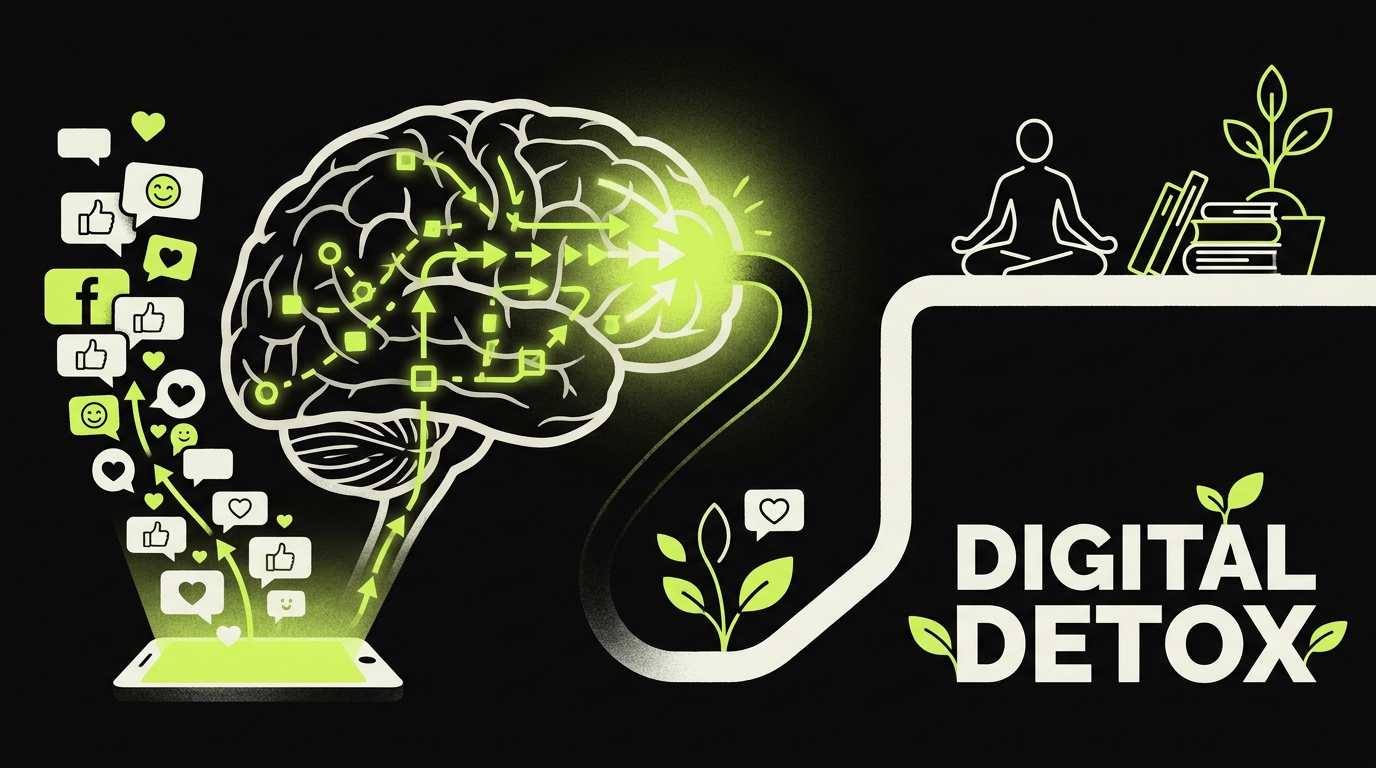
Understanding why you scroll is the first step toward changing it. Personalized feeds, notifications and endless scroll reduce the number of natural stopping points. Checking can then become an automatic response to boredom, stress or a transition between tasks.
This is precisely why willpower alone rarely works. A successful screen detox requires restructuring the environment, not just strengthening resolve.
What a Digital Detox Actually Means
The term "digital detox" gets misused a lot. It does not mean throwing your phone into a lake or spending a weekend in a cabin with no Wi-Fi. A digital cleanse is a deliberate, structured reduction of recreational screen use. Its purpose is to test which changes support your attention, sleep or well-being—not to guarantee a particular outcome.
There is an important distinction between a screen detox and simple abstinence. Abstinence is short-term and fragile. A proper detox shifts your defaults. It changes what you reach for automatically.
A digital detox can take many forms. For some, it means no social media after 9 PM. For others, it is a full 7-day unplugging from devices — like the structured approach described in our Digital detox challenge: a 7-day plan that works. What matters is that the reduction is intentional, time-bound, and paired with replacement behaviors.
One angle many detox guides miss: a technology break is not just about what you stop doing. It helps you notice the cues behind automatic checks and decide what you would rather do in those moments.
A Realistic 7-Day Digital Detox Plan
| Day | Change to test | What to observe |
|---|---|---|
| 1 | Record Screen Time and your three most-opened apps | When and why you check |
| 2 | Disable non-essential notifications | Whether you still open apps automatically |
| 3 | Keep the phone outside the bedroom | Sleep routine and morning checks |
| 4 | Remove one high-trigger app from the Home Screen | Cravings, workarounds and useful friction |
| 5 | Make meals and one focused work block phone-free | Conversation and concentration |
Students can turn that fifth step into a concrete routine with our guide to focusing on homework without checking a phone. | 6 | Schedule two intentional check-in windows | Whether batching feels practical | | 7 | Compare your notes with day one | Which two rules are worth keeping |
Do not treat lower screen time as the only measure of success. A useful result can also be fewer unwanted checks, less bedtime use or more time for something you value.
Does a Digital Detox Work? What the Evidence Says
The evidence is promising in places, but not uniform. A 2025 meta-analysis of 32 randomized trials found small, heterogeneous improvements in subjective well-being after restricting social media. Another 2025 meta-analysis of temporary social-media abstinence found no clear overall effect on positive affect, negative affect or life satisfaction.
The practical conclusion is modest: reducing a specific pattern of use may help some people, but total abstinence is not a guaranteed reset. Define the behavior you want to change and evaluate it against your own sleep, focus and mood.
How to Do a Digital Detox: Step-by-Step
This is the section most people skip to — and for good reason. Knowing why you need a phone detox matters less than knowing how to actually do one. Here is a practical, progressive framework.
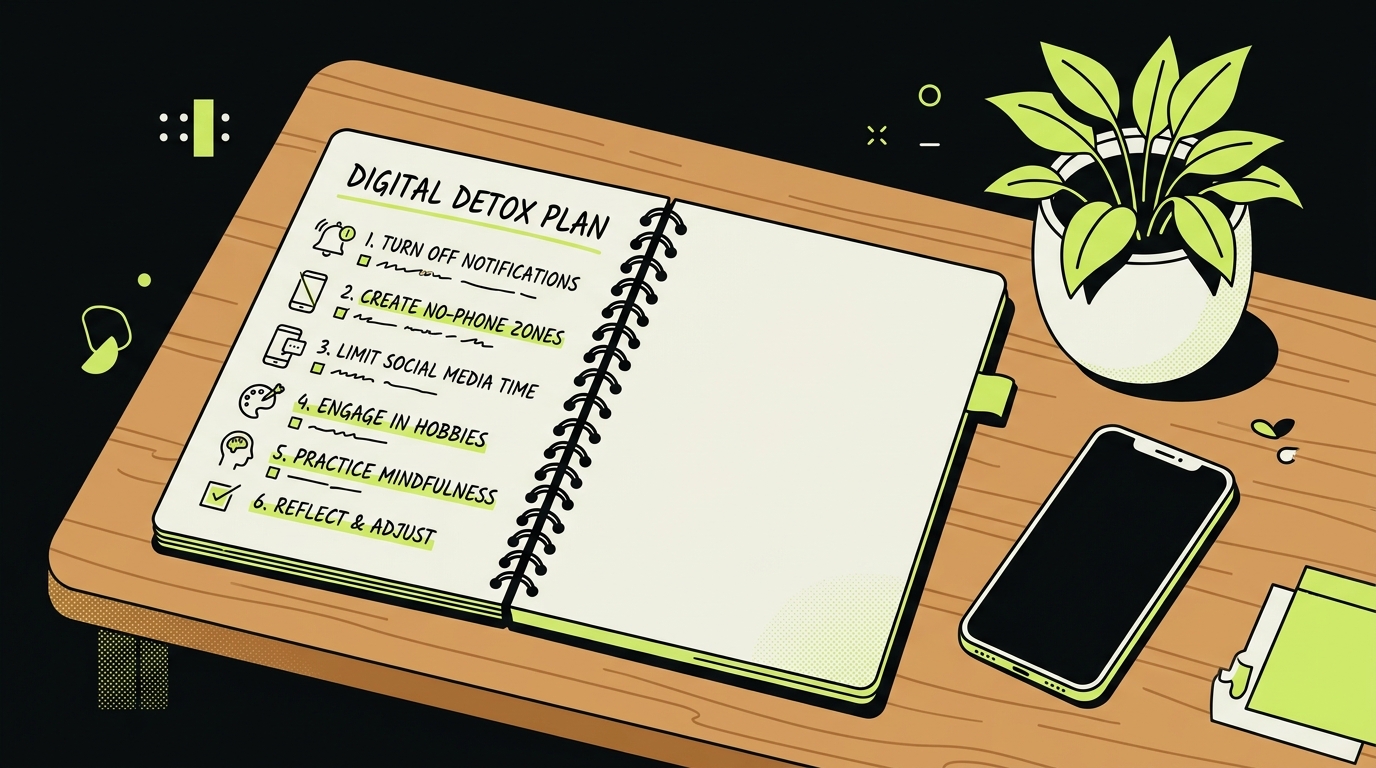
1. Audit your current screen time
Open your iPhone's Screen Time settings and look at your weekly report without judgment. Identify which apps are consuming the most time. Social media, short-form video, and news apps are the usual culprits. Write the number down. You will want this baseline.
2. Define what your digital detox looks like
Decide on scope and duration before you start. A partial detox (for example, no social media before noon) is often easier to sustain than a total blackout. A total detox is more disruptive and requires more preparation. Choose based on your responsibilities and schedule.
3. Remove the apps, don't just hide them
Deleting a high-risk app creates more friction than moving its icon. If removal is too disruptive, start with notifications off and the app away from your Home Screen. For a broader plan, read How to stop doomscrolling.
4. Replace, don't just restrict
Every time you would have scrolled, have a pre-planned alternative ready. A short walk. A few pages of a book. A voice note to a friend. The replacement does not need to be productive. It just needs to be present and intentional.
5. Create phone-free zones and times
The bedroom and dining table are useful places to start. Remove chargers from the bedroom or put your phone in a drawer during meals. Changing the environment can make the desired behavior easier than relying on repeated decisions.
6. Track and reflect at the end of each day
Spend two minutes each evening noting how the day felt—energy, anxiety, focus and mood. This reflection loop gives you evidence about which rules are useful instead of assuming every restriction works.
Digital Detox Tips That Go Beyond Screen Time Limits
Most phone detox guides stop at "use Screen Time limits" or "turn on Do Not Disturb." These are useful but shallow. Here are the higher-leverage tactics that rarely get mentioned.
Reframe saving as a replacement for consuming
One pattern that drives repeated checking is the fear of losing something useful. Rtriv lets iPhone users share supported social-media content or web links into a searchable library and collections. Its separate attention controls can add friction or blocking rules before selected apps open, with daily intentions, quotas and reminders.
Audit your notification architecture
Go through every app and ask whether its notifications require timely action. Start with promotional alerts, recommendations and social activity summaries. Keep time-sensitive messages you genuinely need.
Use analog anchors
Physical objects — a paper book, a notebook, a deck of cards — act as behavioral anchors that pull you away from screens. They are not nostalgic gimmicks. They are attentional tools. Having one on your desk or nightstand changes what you reach for first.
Tell someone
Telling one friend or writing the experiment in your calendar can make the commitment more concrete. You do not need an audience—just a clear start and end point.
For a focused approach to social platforms specifically, see our guide on Social media detox: how to do it and what happens.
What to Expect During Your Technology Break
You may notice automatic reaches, boredom or restlessness when a familiar cue no longer leads to an app. You may also notice no dramatic change at all. Both are useful observations. Record what happens without interpreting discomfort as proof of “withdrawal” or expecting a transformation on a fixed day.
By the end of the week, compare situations rather than only totals: bedtime, meals, focused work and idle moments. Sustainable change is not permanent abstinence; it is keeping the small number of defaults that improve the parts of life you care about.
Key Takeaways
- Treat a digital detox as an experiment, not a cure or a test of willpower.
- Target a specific behavior—bedtime scrolling, notifications or automatic checking—and record what changes.
- Replace scrolling with intentional alternatives — saving content to review later (rather than consuming it instantly) is one of the most effective behavioral swaps.
- Research on temporary restriction reports mixed results, so keep rules that help you rather than assuming complete abstinence is better.
- Seek professional support if anxiety, low mood or compulsive use causes significant distress.
Sources Checked
Frequently Asked Questions
About
Équipe RTRIV
We design RTRIV to turn saved content into decisions, projects and moments that are actually lived.