Omnivore App Review: It Shut Down—What to Use Instead
Omnivore's hosted read-later service shut down in 2024 after its team joined ElevenLabs. Learn what happened and compare practical replacements.
Omnivore app review: the service is no longer available
The most important fact is missing from many outdated reviews: Omnivore's hosted read-later service shut down in November 2024. The team joined ElevenLabs to work on ElevenReader, while Omnivore's source code remained open source. New users therefore should not compare Omnivore as if it were a currently maintained consumer app.
This page explains what happened, what former users valued, and which alternative fits each workflow in 2026.
What happened to Omnivore?
ElevenLabs announced on October 29, 2024 that the Omnivore team had joined the company. The announcement positioned their work around ElevenReader and confirmed that the Omnivore codebase would remain publicly available.
Omnivore's subsequent shutdown notice said the service would support exports only through November 2024 and planned to erase hosted links, highlights, folders, and personal data afterward. The export deadline has therefore passed.
What Omnivore used to offer
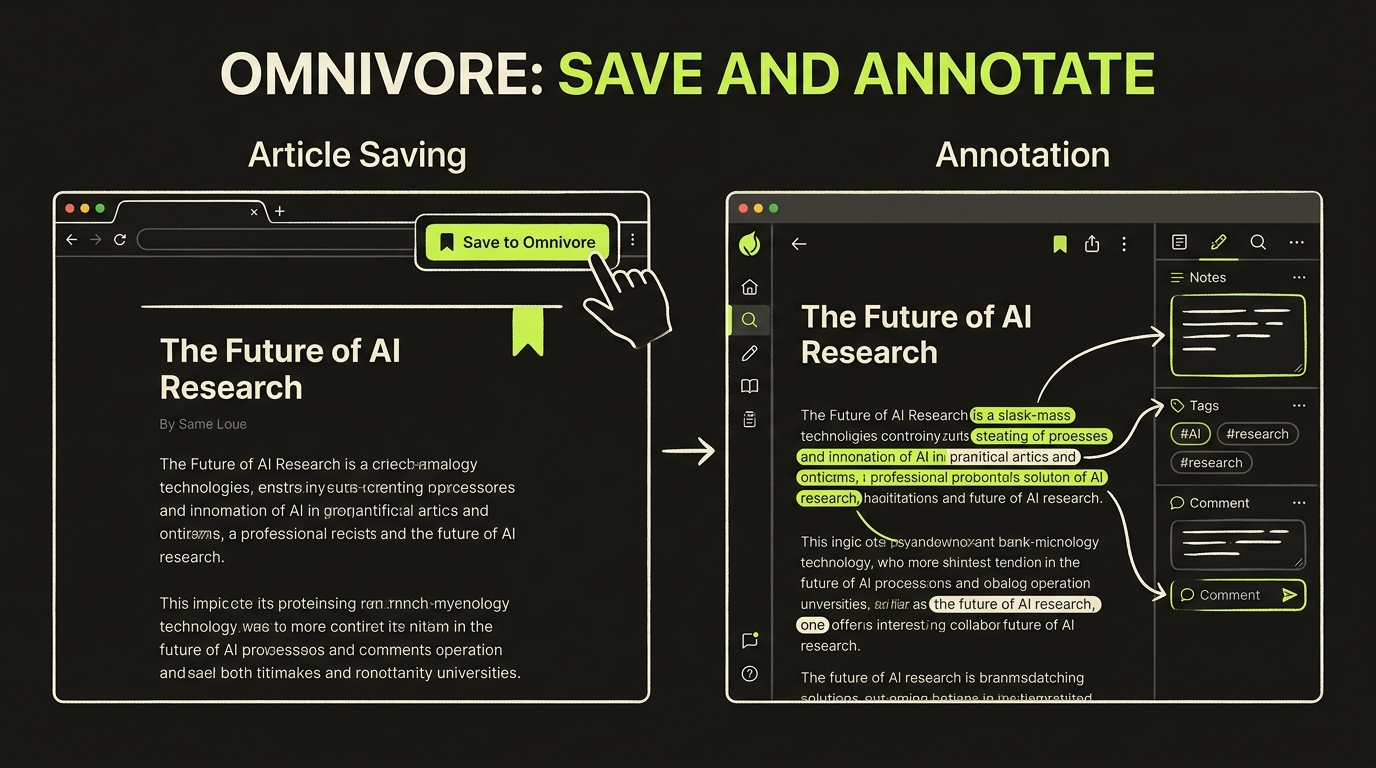
Omnivore built a strong following because it combined:
- clean article and newsletter ingestion;
- highlighting, notes, labels, and filters;
- Obsidian and Logseq integrations;
- open-source code and a privacy-focused positioning;
- free hosted access.
Those strengths are useful criteria for choosing a replacement. But the old iOS app, sync service, and integrations should not be described as an active recommendation today.
Is self-hosting the same as keeping Omnivore?
No. Open-source availability means a technically capable person or community can inspect, modify, and deploy the code. It does not recreate the discontinued hosted service automatically. Self-hosting involves infrastructure, updates, backups, security, email ingestion, and compatibility work.
Choose that route only if you actively want to maintain a service. Most readers should migrate to a supported product instead.
Omnivore alternatives by use case
| Need | Better fit | Trade-off |
|---|---|---|
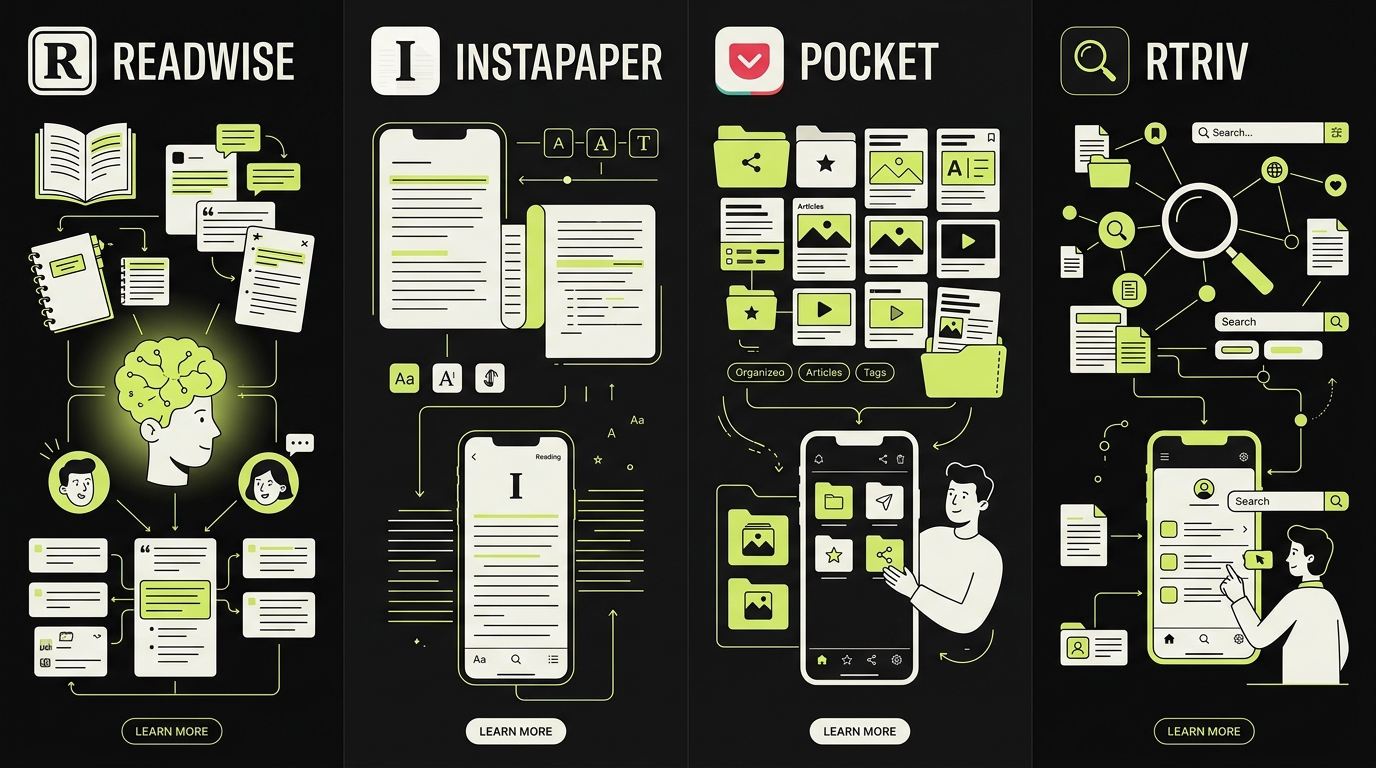
| Deep reading, PDFs, highlights | Readwise Reader | Paid and feature-dense |
| Minimal read-later queue | Instapaper | Fewer knowledge-management features |
| Social saves turned into usable information | Rtriv | Different from a traditional article reader |
| Local/open workflow | Self-hosted open-source tools | Maintenance responsibility |
| Text-to-speech listening | ElevenReader | Not a direct Omnivore replacement |
Readwise Reader
Reader is the closest fit for users who valued annotation and knowledge-management integrations. Compare its limits and pricing in our Readwise alternatives guide.
Instapaper
Instapaper is simpler and better suited to people who want a focused reading queue rather than a complete research system. See the Instapaper alternatives comparison.
Rtriv
Rtriv is not a clone of Omnivore. It is designed around content saved from social platforms, extracting useful information and connecting it to actions, collections, maps, and recommendations. Choose it when the source of the backlog is social media rather than long-form web reading.
What about Pocket and ElevenReader?
Pocket itself shut down in 2025, so articles that still recommend it as an active fallback are outdated. Our current read-later app comparison reflects the remaining choices.
ElevenReader is the product the Omnivore team went on to support at ElevenLabs. It focuses on listening to text, articles, PDFs, and ebooks. That can replace the audio part of a reading workflow, but ElevenLabs did not present it as a dedicated Omnivore-style read-later and annotation service.
Verdict
Omnivore is no longer a viable hosted app recommendation. Its product ideas remain influential and its code remains open, but a 2026 decision should compare maintained alternatives. Pick according to the workflow you actually need: deep annotation, simple reading, self-hosting, audio, or structured social saves.
Sources
- ElevenLabs — Omnivore joins ElevenLabs
- Archived Omnivore shutdown details
- ElevenLabs — official mobile apps
Key takeaways
Omnivore's hosted service closed in 2024; open-source code does not mean the consumer service still operates. Choose a maintained alternative based on the job Omnivore performed for you, and do not expect the expired export window to remain available.
Frequently asked questions
Is the Omnivore app still available?
No. The hosted service was wound down after the team joined ElevenLabs. The codebase remaining open source is a separate fact.
Can I still export my Omnivore data?
The announced export period ended in November 2024. Check any local backups or exports you created before that deadline.
What is the best Omnivore alternative?
Readwise Reader fits deep research, Instapaper fits simple reading, and Rtriv fits structured social-media saves.
Frequently Asked Questions
About
Équipe RTRIV
We design RTRIV to turn saved content into decisions, projects and moments that are actually lived.